Reviewed · ANGKOR WAT TOURS
Siem Reap: Angkor Wat Tour with Italian-Speaking Guide
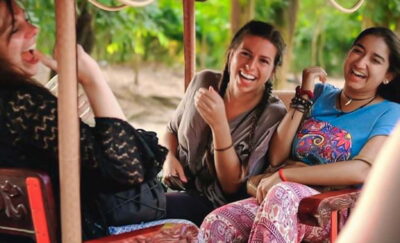
Angkor is easier to understand when someone can point out the smiling faces at Bayon, explain why roots have been left on Ta Prohm, and connect the carvings to Khmer culture. This private tour does that in Italian, with your guide meeting you at the hotel and adjusting the pace to your group. I especially like the cold water and chilled towels after each temple, plus the guide’s help finding quieter approaches and good photo spots.
I also like the choice between a concentrated one-day circuit and a more relaxed two-day visit that reaches Banteay Srei. The main consideration is cost: $140 covers a private group of up to two, but your Angkor pass and lunches are extra. If your Italian guide speaks more briefly, as can happen with Caro, you may want to ask plenty of questions.
Key points to know before booking
- Italian-speaking private guide: Guides including Matteo, Caro, Chhoure, and Alex have led this experience, with explanations tailored to your questions and pace.
- One or two days: The one-day visit covers the essential temples, while two days adds the Grand Circuit and Banteay Srei.
- Cool-down care: Transport includes cold water and chilled towels, a small comfort that matters in Cambodia’s heat.
- Flexible transport: One or two people ride by tuk-tuk on the first day, with a private car on Day 2 of the extended tour. Larger groups use an air-conditioned van or bus.
- Temple ticket extra: The Angkor pass costs $37 per adult for one day or $62 for two to three days and is not included.
- Best for Italian speakers: The tour suits couples, families, and small groups who want cultural context without translating every explanation.
Why an Italian guide changes the Angkor visit
Angkor is not a place you simply walk through and photograph. Its temples are huge, its symbols are layered, and many details are easy to miss when you are focused on heat, crowds, and where to step next.
An Italian-speaking guide gives you a better chance of understanding what you are seeing as you see it. The tour focuses on the history, art, and culture of the ancient Khmer world, rather than leaving you with a string of impressive stones and half-remembered names.
The private format matters, too. You are not tied to the pace of a large group. If you want more time at a carving, a family with young children needs a pause, or you have questions about Khmer beliefs, the guide can respond directly.
The guides named in the feedback include Matteo, Caro, Chhoure, and Alex. Matteo is described as lively, detailed, and good at adding anecdotes and taking photos. Chhoure is praised for clear explanations and an easy sense of humor. Alex is noted for answering questions and speaking good Italian. Caro has also adapted the route for small children and helped families decide where a stroller or baby carrier would work best.
Language ability can vary by guide. Caro’s Italian was strong enough for the tour, but some answers were brief. That is not a major problem if you come prepared with questions and tell the guide what interests you most.
More ways to walk into Angkor Wat:
- Angkor Wat Sunrise or Sunset Tour with Guide from Siem Reap
★ 5.0 · 12,109 reviews - Siem Reap: Angkor Wat: Small-Group Sunrise or Sunset Tour
★ 5.0 · 9,444 reviews - Siem Reap: Angkor Wat 2-Day Tour with Sunrise and Sunset
★ 4.9 · 4,429 reviews
The one-day plan: Angkor’s essential monuments
The one-day program begins with hotel pickup at about 8:30 AM in Siem Reap. You go first to the ticket booth unless you have already bought your pass online. The Angkor Archaeological Park ticket is separate, so include that cost when you compare the total price.
This day follows the main temples of the Small Circuit, though the listed stops also include several Angkor Thom monuments and Srah Srang. The finish is usually around 5:00 PM, although weather and the exact pace can affect the timing.
South Gate and Angkor Thom
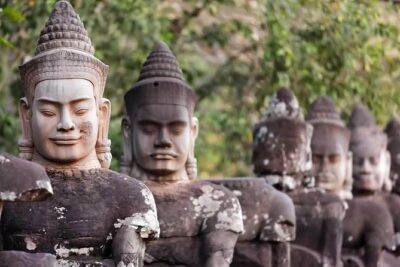
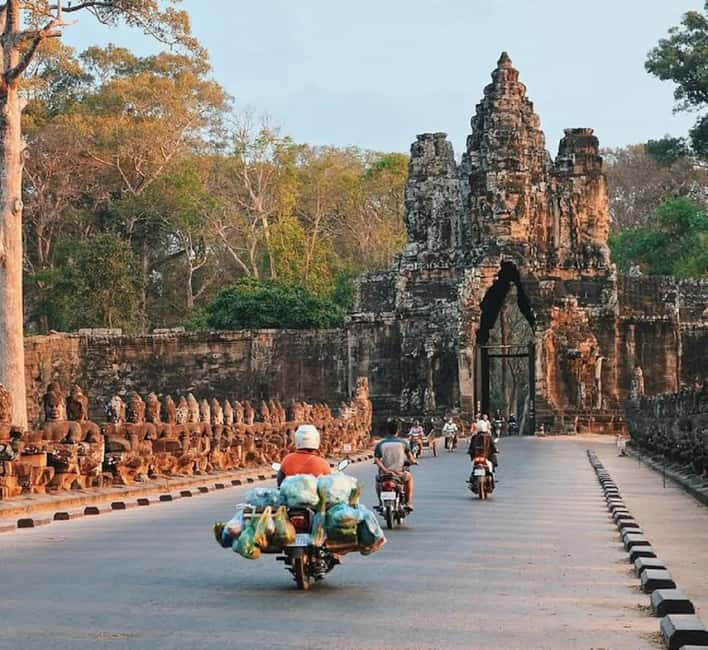
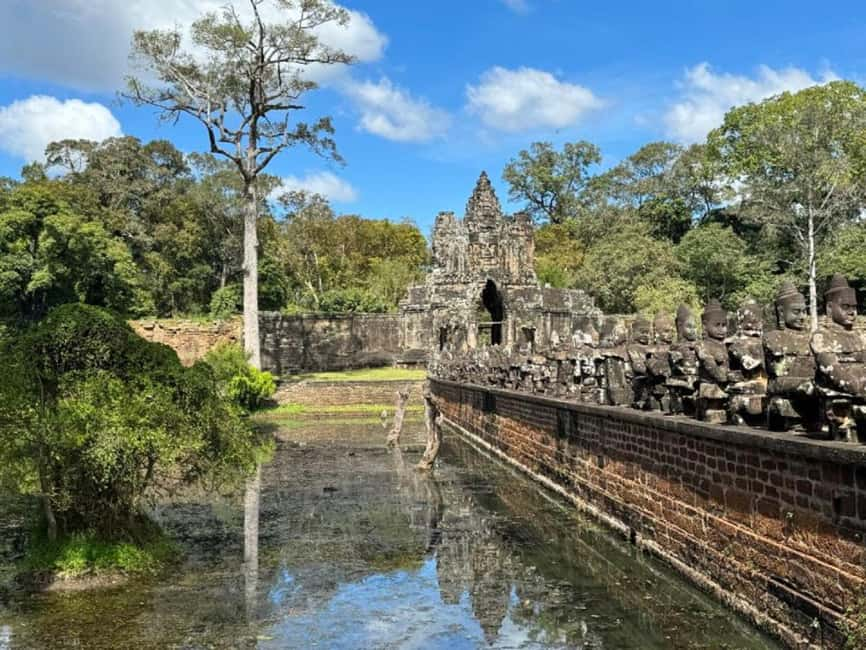
The South Gate of Angkor Thom gives you a dramatic first look at the old city. Stone figures line the approach, and giant carved faces watch from the gate tower. It is a good place for your guide to explain the religious ideas and royal power behind the monument before you begin walking.
You then reach the Victory Gate for a short photo stop. At 15 minutes, this is not a long visit, but it breaks up the drive and adds another view of Angkor Thom’s defensive design.
Bayon and its quiet smiles
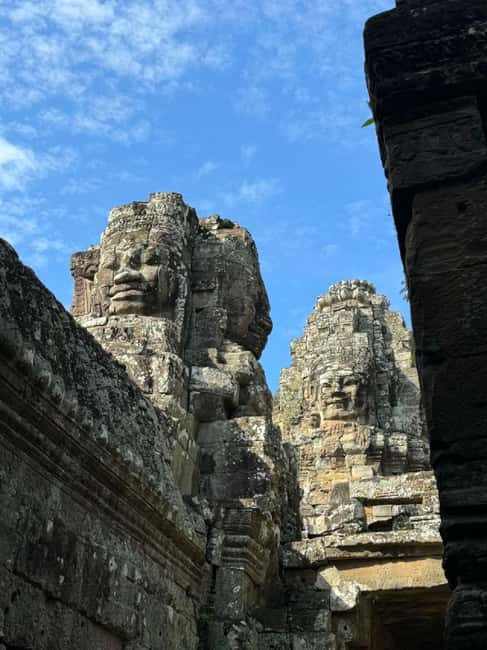
Bayon is one of the most memorable stops. Its towers carry serene faces that appear from different angles as you move among the corridors. The temple can feel confusing at first, with passages crossing in several directions, so a guide helps you notice the structure instead of wandering past the details.
Plan on about 45 minutes here. That is enough for a guided look at the central towers and carvings, but not enough to study every gallery. If you love sculpture, tell your guide early. A private tour gives you a better chance to spend your time on the details that matter to you.
A few more Siem Reap half-days worth weighing up
- From Siem Reap: Kampong Phluk Floating Village Tour by Boat
★ 4.9 · 6,979 reviews - Sunset tour of Kampong Phluk stilts home village on the Tonle Sap
★ 5.0 · 4,865 reviews - Siem Reap: Kampong Phluk Floating Village Tour with Boat
★ 4.9 · 3,843 reviews - Siem Reap: Full-Day Angkor Wat Guided Tour with Sunset
★ 4.9 · 3,803 reviews
Baphuon and the royal terraces
Baphuon takes about 45 minutes. The temple is known for its tall, tiered form and long approach, giving you a sense of how royal architecture was meant to impress from a distance as well as up close.
Next come the Terrace of the Elephants and the Terrace of the Leper King. The Elephant Terrace is a 20-minute visit and photo stop, with long carved panels and a broad ceremonial setting. The Terrace of the Leper King is included in this part of the route, too. Your guide can help you read the carvings and place these monuments within Angkor Thom, rather than treating them as isolated photo backdrops.
Ta Prohm and the power of nature
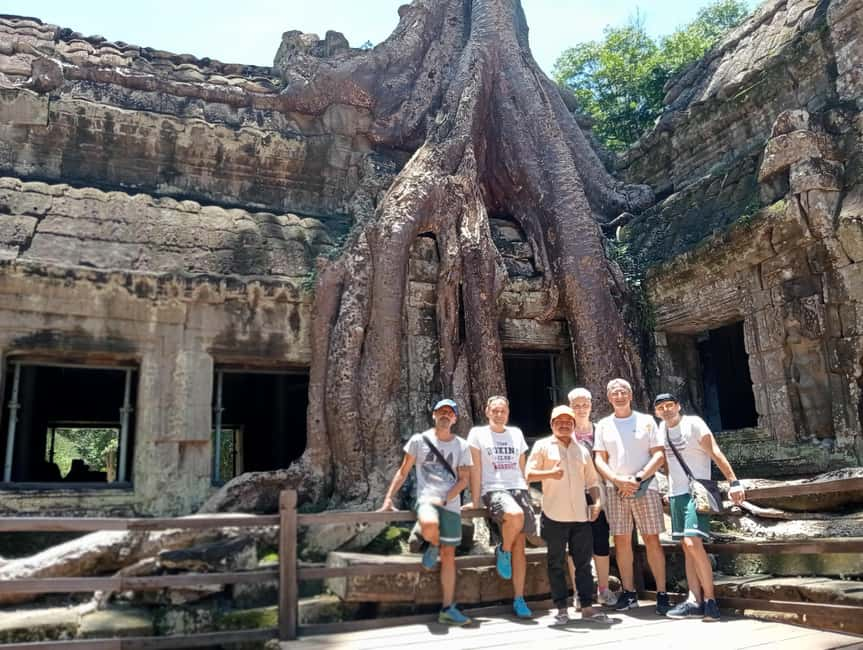
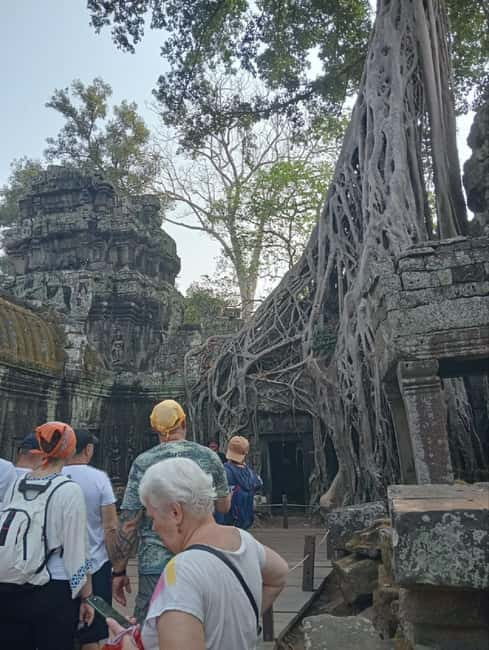
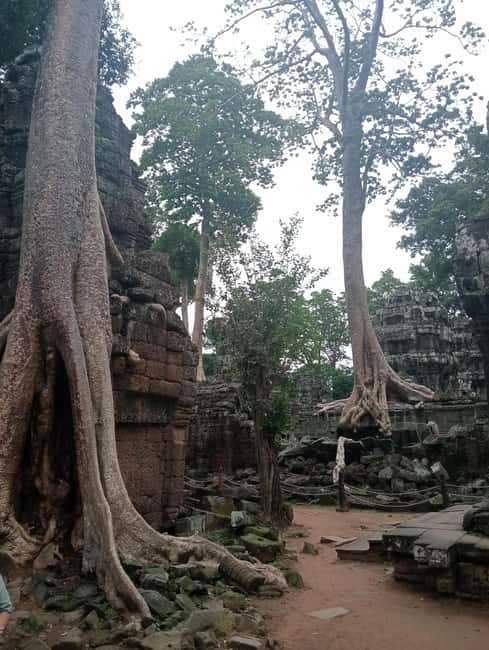
Ta Prohm is the temple most closely linked with giant tree roots spreading across stone galleries. The roots are not a decorative addition. They show what happens when a vast religious site is left exposed to tropical growth for generations.
You have about an hour here, which is useful because Ta Prohm has narrow passages, broken sections, and many corners worth seeing. It can be crowded, so the guide may use a less direct entrance or a quieter route when possible. That approach has practical value: you get better views and fewer people blocking the most famous scenes.
The temple is photogenic, but do not rush it. Look for the carved doorways and galleries as well as the roots. The combination of careful Khmer stonework and trees pushing through the walls is what makes Ta Prohm different from Angkor Wat or Bayon.
Srah Srang, lunch, and a break
The itinerary allows about an hour for a break and lunch near Srah Srang. Lunch is not included, so bring cash for a Cambodian meal at a nearby restaurant. The stop gives you a chance to sit down before the longest and most important temple visit of the day.
Your driver or guide provides cold water and a cold towel during the visits. In the heat, this is more than a nice extra. It lets you cool off before getting back into the tuk-tuk or car and walking again.
Angkor Wat in the afternoon
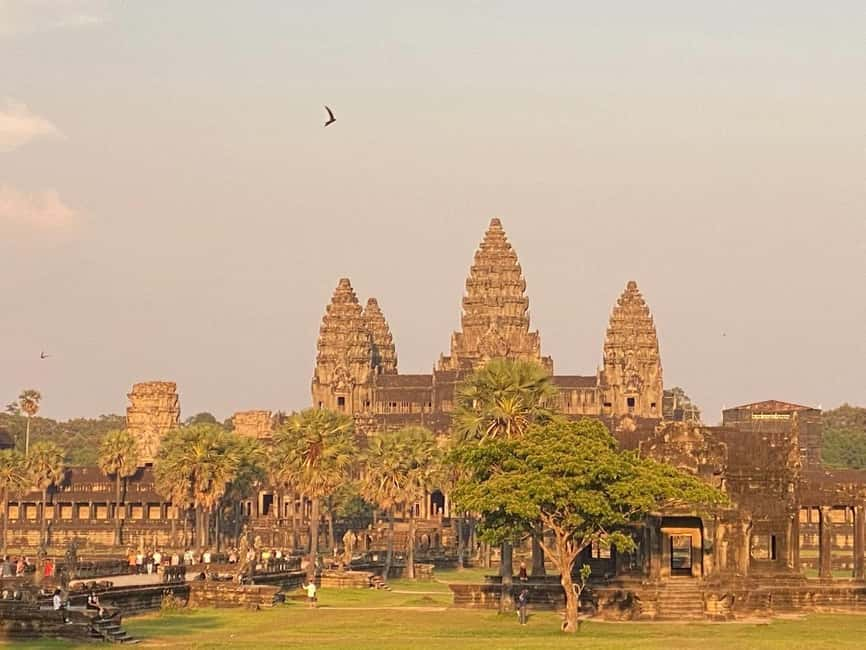
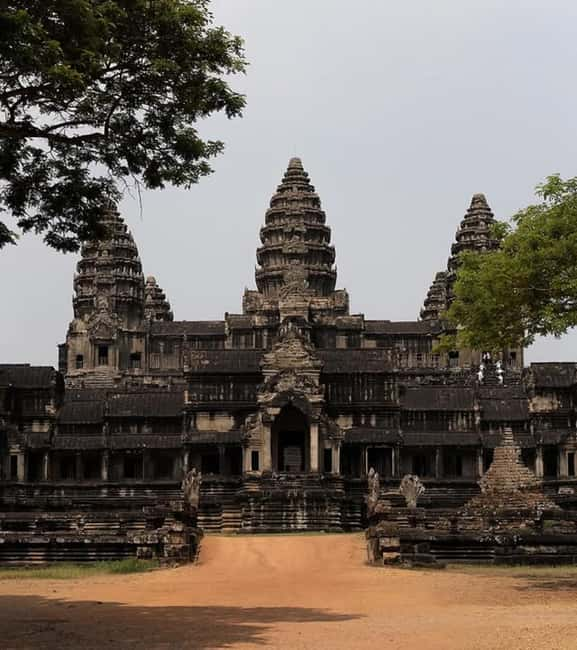
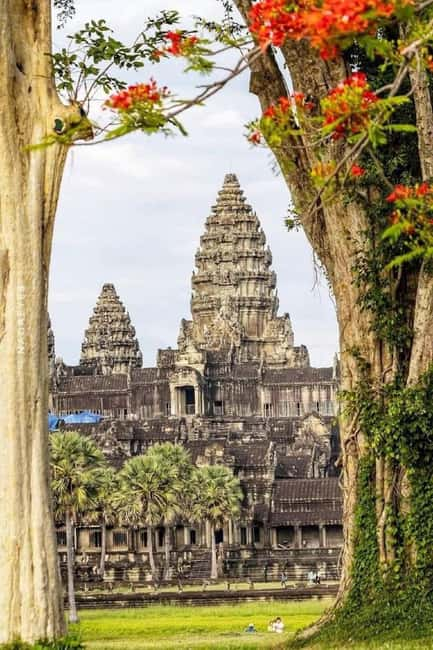
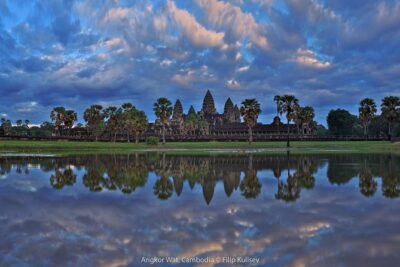
The final major stop is Angkor Wat, with about two hours for a guided visit. This is the right place to slow down. The temple is the world’s largest religious monument, and its scale can be hard to grasp until you cross the approach, pass through the galleries, and see the towers rise ahead.
Your guide can explain the temple’s history, art, and symbolism while you move through the complex. Pay attention to the bas-reliefs and the way the building is arranged around courtyards and towers. Two hours gives you a solid introduction, but Angkor Wat alone could fill much longer if you want to inspect every carved panel.
Rain may shorten the time outside the temple. One recorded visit finished earlier than planned because of bad weather, so keep a light rain layer handy if the forecast looks uncertain. The return to your hotel usually comes around 5:00 PM.
The two-day option gives Angkor room to breathe
If your schedule allows, I prefer the two-day option for most adults. The first day covers the major temples, while the second reaches the Grand Circuit and Banteay Srei. You pay more in time and transport, but you are less likely to feel that every stop is competing with the next one.
A sunrise option is available for the morning tour, beginning at 5:00 AM and finishing around noon. Select it only if you are comfortable with the early start. The supplied details do not promise a specific sunrise viewpoint, so confirm the exact plan when booking if that moment is important to you.
Preah Khan’s long corridors
The second day begins with Preah Khan, a large monastic complex filled with corridors, carved doorways, and atmospheric spaces. It is a good temple for a guide because its size can make the layout hard to follow on your own.
Give yourself time to look beyond the first entrance. Preah Khan rewards patient walking, though uneven ground and long distances may be tiring for anyone with limited mobility.
Neak Pean and its pools
Neak Pean is smaller and more unusual than Preah Khan. It sits within a setting of pools, creating a calmer visual break after the larger temple. The stop is more about the relationship between water, architecture, and religious purpose than about exploring a huge building.
Ta Som’s tree-covered gate
Ta Som is known for its tree-covered gate, a smaller-scale echo of Ta Prohm’s famous roots. The attraction is easy to understand, but the temple also gives you another chance to see how vegetation and stone now share the site.
The Grand Circuit can feel less intense than the main Small Circuit, yet the heat remains the same. Keep using the water and cold towels, and avoid treating the second day as an effortless add-on.
East Mebon and Pre Rup
East Mebon once stood on an island in an ancient reservoir. The water is no longer the main feature, but the temple’s elevated form helps you picture how Angkor’s water system shaped royal construction.
Pre Rup is a mountain-style temple with broad views toward the Cambodian countryside. It is a strong late-afternoon stop, though the stone stairs and exposed terraces can be demanding in the sun. Take care on the steps and wear shoes with a firm sole.
Banteay Srei, the finest carving stop
Banteay Srei is the prize at the end of the extended route. Its pink sandstone carvings are unusually fine, with a level of detail that rewards close attention. The name is often translated as Citadel of Women, and the temple is admired for some of the finest artistic work in the Angkor area.
Banteay Srei is also farther from the central temples, which is one reason it makes more sense on a two-day plan. You are not trying to squeeze it into a day already packed with Angkor Wat, Bayon, and Ta Prohm.
The second day ends around 4:00 PM, followed by hotel drop-off. Lunch remains extra, and the transport arrangement changes for small groups: tuk-tuk on Day 1 and a private car on Day 2. Groups of three or more use an air-conditioned van or bus.
Transport, timing, and comfort in the heat
For one or two people on the one-day tour, transport is by tuk-tuk unless you select a car at checkout. The open sides give you a better sense of the route and provide a breeze between temples, but you are still exposed to sun, dust, and heat.
On the two-day tour, one or two people use a tuk-tuk on the first day and a private car on the second. Larger groups travel by air-conditioned van or bus. The private setup is especially useful for families because the guide can adjust the pace, and one family used the advice to choose between a stroller and a baby carrier at different temples.
Wear comfortable shoes, sunglasses, a hat, sunscreen, and insect repellent. Bring clothing that covers your shoulders and knees. The safest choice is long trousers or a knee-covering skirt with a shirt that covers the shoulders. A scarf may work at some temples, but do not rely on it everywhere, especially when entering Angkor Wat.
Alcohol and drugs are not allowed. The tour is not suitable for wheelchair users or people over 95, and children under 12 can join free of charge. Children under 12 also do not need an Angkor ticket, but you must show a passport as proof of age.
What the $140 price really covers
The listed price is $140 per private group of up to two people. It covers the guide, hotel pickup and drop-off, transport according to the selected option, transfers, cold water, cold towels, and the planned temple visits.
The Angkor pass is extra: $37 per person for one day, or $62 per person for a two to three-day pass. Lunch is also extra. For two adults choosing the one-day tour, add $74 for entrance tickets, bringing the known total to $214 before lunch.
That price is not the cheapest way to see Angkor, but private transport and an Italian-speaking guide make the comparison different from a basic shared ride. The value is strongest if you want explanations in Italian, have limited time, or care about controlling the pace and photo stops.
For a solo visitor, $140 feels less attractive because the group price is not split with another participant. For two people, it is easier to justify. Families may also find value in the free participation for children under 12 and the guide’s ability to adjust the route.
The tour offers free cancellation up to 24 hours before departure and a reserve-now, pay-later option. Pickup and drop-off are included, but provide the hotel name or address and a contact number when booking.
Who should choose this Angkor tour?
I would choose this experience if you want Angkor explained in Italian and do not want to manage a large group. It fits couples especially well, but it also works for families who need more control over stops, walking time, and breaks.
Choose one day if your priority is the four headline experiences: Angkor Thom, Bayon, Ta Prohm, and Angkor Wat. It is a full day, not a quick sampler, and the heat can make the final temple feel demanding.
Choose two days if you want Banteay Srei, prefer a less rushed schedule, or enjoy smaller temples such as Neak Pean and Ta Som. The extra day also reduces the pressure to race from one major monument to the next.
This may not be ideal if you want complete independence or plan to visit every minor temple. It is a guided cultural tour, not a free-form temple pass. Also keep in mind that the Italian explanations may be more detailed with one guide than another, so ask for the guide’s name and tell the operator what kind of commentary you want.
Should you book it?
Book this tour if Italian-language guidance, private transport, and a flexible pace matter more to you than finding the lowest possible price. Matteo, Chhoure, and Alex are praised for clear, engaging explanations, while Caro has shown good care with families and young children.
For most people, I would pick the two-day version. Banteay Srei is too good to squeeze into an already long day, and the Grand Circuit gives you a broader look at Angkor beyond the famous three temples.
Pick the one-day tour if time is tight and you want the essential monuments in one well-organized route. Either way, budget for the entrance pass and lunch, dress for temple rules, and leave room for weather to change the schedule.
FAQ
Is the Angkor entrance ticket included?
No. The ticket costs $37 per person for one day, or $62 per person for two to three days. Children under 12 do not need a ticket, but a passport must be shown as proof of age.
What time does the tour begin?
The standard pickup is at 8:30 AM from your hotel lobby. A sunrise morning option for the two-day tour starts at 5:00 AM and finishes around noon.
How many people can join for $140?
The price is for a private group of up to two people. Children under 12 can join free of charge, while adults aged 12 to 90 pay the standard price.
What transport is used?
For one or two people, the one-day tour uses a tuk-tuk unless you select a car at checkout. On the two-day option, transport is by tuk-tuk on Day 1 and private car on Day 2. Groups of three or more use an air-conditioned van or bus.
Is lunch included?
No. Lunch is taken at a nearby Cambodian restaurant and must be paid for separately.
What should I wear to the temples?
Wear clothing that covers your shoulders and knees. Shorts, short skirts, sleeveless shirts, tank tops, and other revealing clothing are not permitted. Comfortable shoes, sunglasses, a hat, sunscreen, and insect repellent are also recommended.
Can I cancel the booking?
Yes. You can cancel up to 24 hours in advance for a full refund. A reserve-now, pay-later option is also available.
Just added around Siem Reap
- Ultimate Sunrise to Angkor Wat, Angkor Thom and Bayon Temple★ 5.0 · 3 reviews
- Twilight Tastes of Siem Reap Include Dinner★ 5.0 · 13 reviews
- Trekking Tour at Phnom Kulen National Park from Siem Reap★ 5.0 · 3 reviews
- Professional Photo Shoot in Angkor Archaeological Park, Siem Reap★ 5.0 · 42 reviews
- Full-Day Private Tour of Angkor Wat with Pick Up★ 5.0 · 12 reviews
- Unveiling 2 Days Private Angkor Wat/Beyond In Sunrise/Sunset Tour★ 5.0 · 48 reviews
- Siem Reap City Tour with War Museum and Killing Field★ 5.0 · 27 reviews
- Private Day Trip to Angkor Temples with Expert Guide★ 5.0 · 4 reviews
Angkor Wat Tours, compared.
Angkor Wat Sunrise or Sunset Tour with Guide from Siem Reap
Read our review →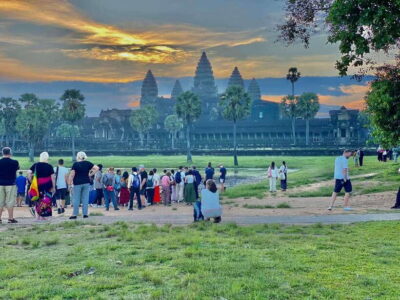
Angkor Wat: Small-Group Sunrise or Sunset Tour
Read our review →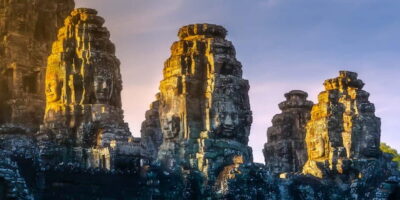
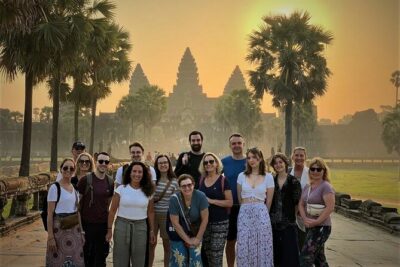
Angkor Wat Highlights and Sunrise Guided Tour from Siem Reap
Read our review →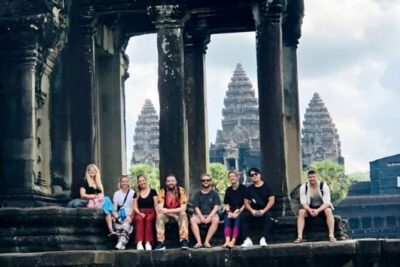
Angkor Wat Sunrise & 3 Main Temples with Breakfast – Small Group
Read our review →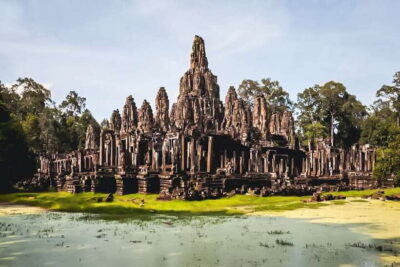
Angkor Wat Sunrise and Full-Day Sightseeing Tour
Read our review →