
Reviewed · ANGKOR WAT TOURS
Sunrise at Angkor Wat and Small Tour with Tours Guide
Angkor Wat at sunrise is the reason to set an alarm for 4 AM. You reach the temple before the heat builds, watch the sky brighten behind its famous towers, then spend the morning among Cambodia’s greatest monuments. I especially like the early start and the chance to see several major temples in one day with a local guide. The $6 tour price is unusually low for hotel transfers, an English-speaking guide, water, and a cold towel.
The catch is that the temple admission is not included. You’ll need an Angkor pass, starting at $37 for one day, and a shared group can be large. One booking had 22 people, and some English was difficult to follow. A private group costs more, but it gives you more control over pace and questions.
Key points to know before booking
- Sunrise begins around 4:30 AM: Your hotel pickup is early, but the reward is cooler air and first access to Angkor Wat.
- Several major temples fit into one day: You visit Angkor Wat, Angkor Thom, Bayon, Ta Prohm, and Banteay Kdei.
- The Angkor pass costs extra: A one-day pass is $37, while three-day and seven-day passes cost $62 and $72.
- Guide quality matters: Guide Ounra was praised for finding good photo spots and helping avoid crowds.
- Shared groups may be sizable: One group reached 22 people, so choose the private option if you want a quieter day.
- The $6 price covers basics only: Transport, guiding, bottled water, and a cold towel are included, but food and temple admission are not.
Why the Angkor Wat sunrise is worth the alarm
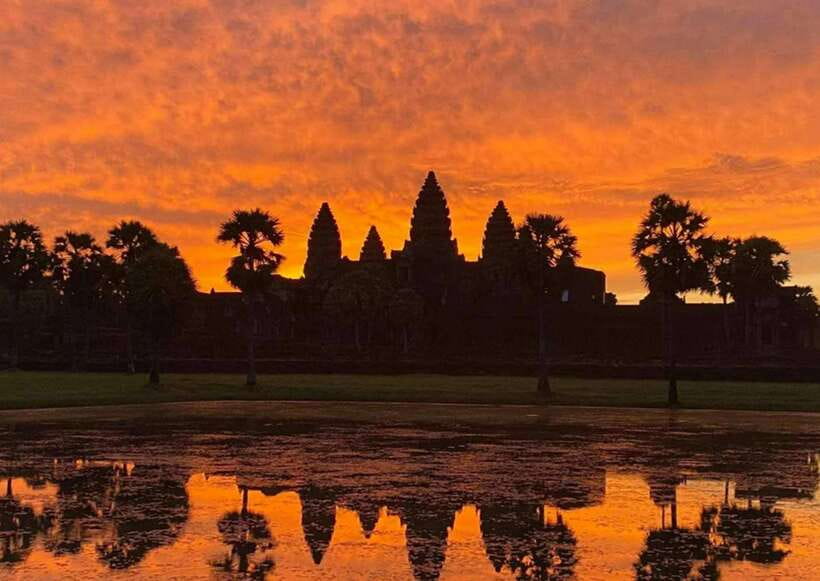
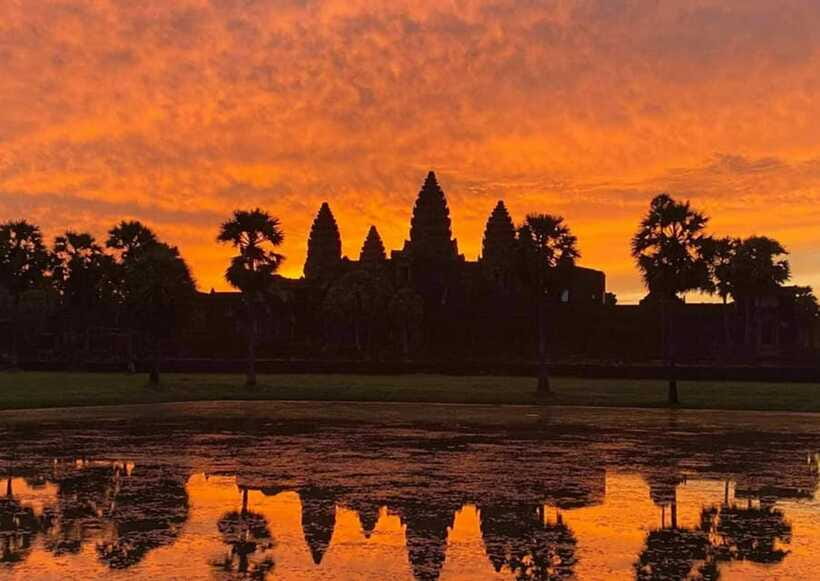
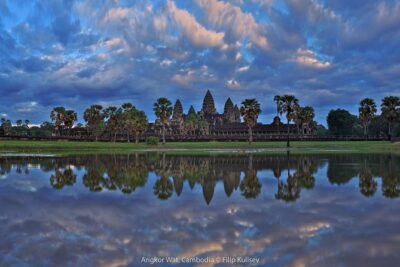
The tour begins with hotel pickup at 4:30 AM in an air-conditioned vehicle. You’ll need to provide your hotel name and room number by email or WhatsApp, so do this before the morning of the tour. The drive takes you to the main entrance area of Angkor Wat, where you can wait for the light to change over the temple’s towers.
Sunrise is not guaranteed to produce a perfect pink sky. Weather decides that. Still, the timing gives you something valuable even on a cloudy morning: cooler temperatures, soft light, and a quieter start than a late-morning visit. Angkor Wat is enormous, and beginning beside its reflecting pools gives you a clear sense of scale before the day becomes hot.
The sunrise portion allows roughly two hours, followed by additional time for guided sightseeing inside the temple area. Expect walking on uneven stone, steps, and open paths. Comfortable shoes are more useful than stylish ones here, and a small bag is easier to manage than a heavy daypack.
The tour description includes a breakfast break of about 30 minutes after the sunrise visit. Meals are not included, so you’ll pay for breakfast and lunch yourself. One of the supplied experiences praised the restaurant chosen for lunch, but another noted that food near the temples can be expensive. Carrying some Cambodian riel or US dollars is sensible, although the tour does provide bottled drinking water.
More ways to walk into Angkor Wat:
- Angkor Wat Sunrise or Sunset Tour with Guide from Siem Reap
★ 5.0 · 12,109 reviews - Siem Reap: Angkor Wat: Small-Group Sunrise or Sunset Tour
★ 5.0 · 9,444 reviews - Siem Reap: Angkor Wat 2-Day Tour with Sunrise and Sunset
★ 4.9 · 4,429 reviews
Angkor Wat, more than a sunrise backdrop
It is easy to treat Angkor Wat as a photo stop, especially when everyone is watching the sky. The guided visit gives the temple more meaning. Your guide can explain its role in the Khmer Empire, the stories shown in its carvings, and how Cambodian art developed through religious architecture.
The first Angkor Wat visit lasts about two hours, with another sightseeing period of roughly 90 minutes listed later in the schedule. That suggests you’ll have time both for the famous exterior view and for a closer look around the temple grounds. The exact order may vary with crowds and the pace of the group.
The main practical issue is crowd management. Angkor Wat is the most famous stop in the complex, so the best photo position can fill quickly. Guide Ounra received particular praise for knowing good viewing points and helping avoid some of the crowd. That kind of local timing is one of the strongest reasons to use a guide rather than simply hiring a ride.
You should also remember that this is a long day, not a quick sunrise transfer. After Angkor Wat, the tour continues through several more temples. The early start is helpful in the heat, but you may feel tired by Ta Prohm and Banteay Kdei.
South Gate and the road into Angkor Thom
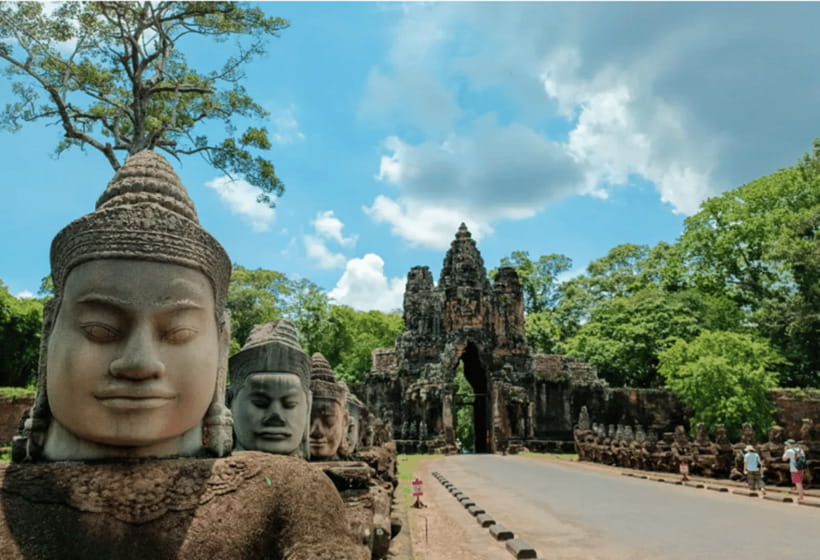
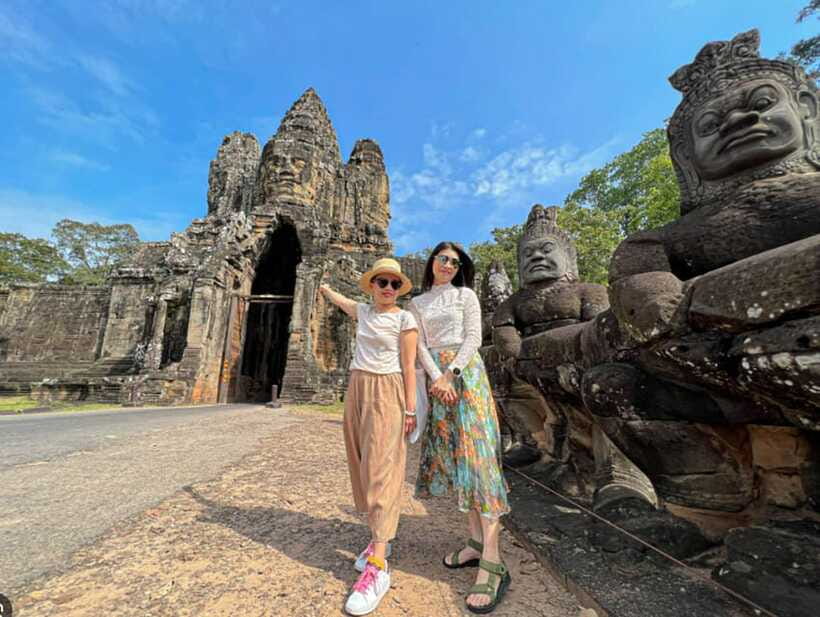
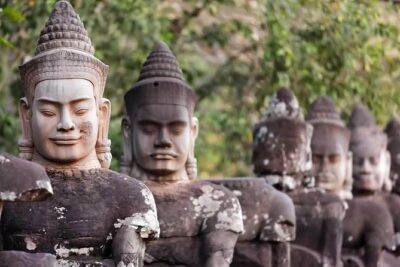
After Angkor Wat, the vehicle heads toward the South Gate of Angkor Thom. The gate is more than a place to pass through. Its approach is lined with large stone figures holding a serpent, creating a dramatic entrance road into the old royal city.
The tour allows about an hour at the South Gate, followed by a shorter photo and sightseeing period. Your guide can explain the symbolism of the statues and place the gate within the plan of Angkor Thom. This is a good point to ask questions, since the details can be easy to miss when you are focused only on taking pictures.
Angkor Thom is a huge area, and the day does not attempt to cover every corner. Instead, it concentrates on the central monuments and key royal platforms. That is a sensible plan for an eight-hour tour, though you should not expect a slow, empty-temple experience at every stop.
Bayon’s stone faces and the center of Angkor Thom
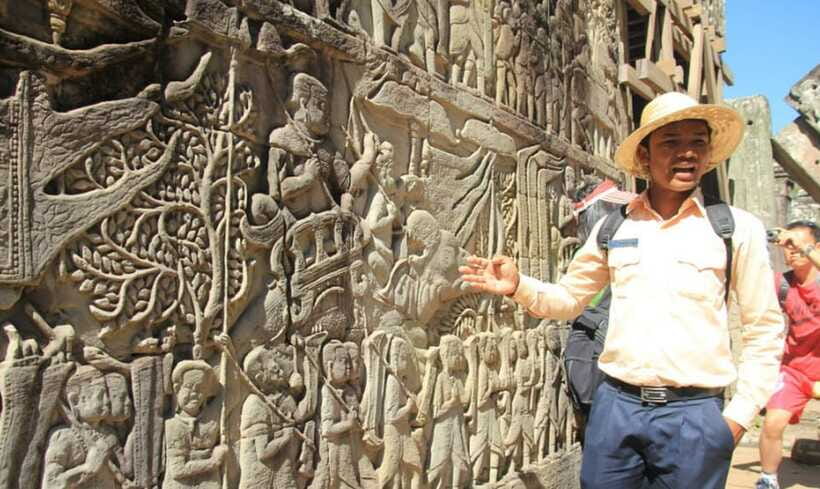
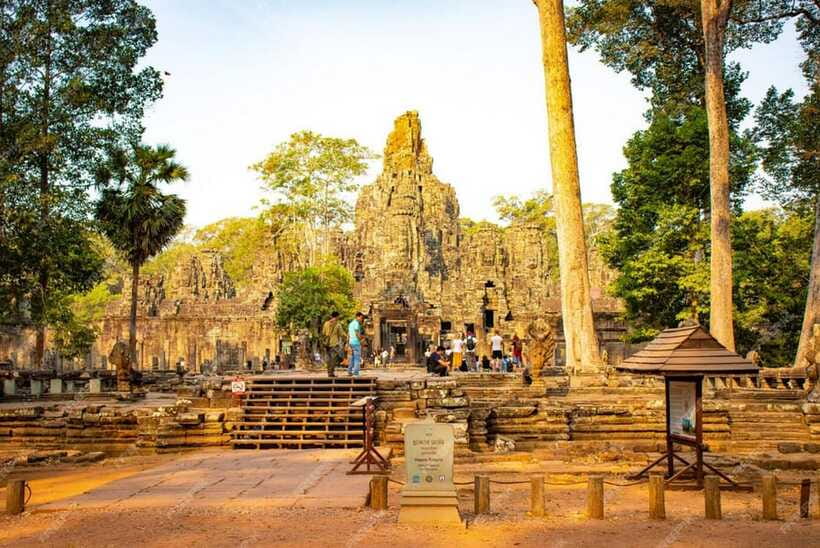
Bayon is the visual surprise of the morning. Its towers carry the famous serene faces associated with Avalokitesvara, a Buddhist figure linked with compassion. The tour description refers to 54 towers and 216 faces, though the number of visible faces can vary depending on how the monument is counted and what survives.
What matters when you are there is the close-up effect. At a distance, Bayon looks like a pile of stone towers. Inside, narrow passages and stairways bring you near the carved faces, which appear from different angles as you move through the temple.
Allow about 90 minutes for the guided Bayon visit. That is enough time to look carefully without turning the stop into a rushed photo sprint. I would listen to the guide here, because the structure is confusing at first. Without context, you may see only towers and corridors. With an explanation of the temple’s religious purpose and the Khmer kings who built it, the design becomes easier to read.
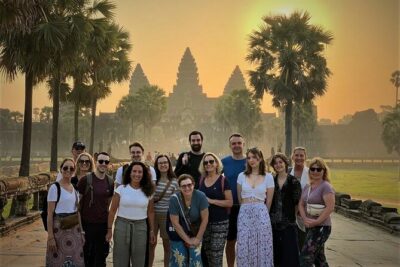
The shared group format can matter most at Bayon. A guide must keep people together through tight spaces, and a group of 22 may not hear every explanation equally well. One English-language review noted that the guide’s speech was sometimes hard to understand. If you depend on detailed commentary, private guiding is the safer choice.
More early starts around Siem Reap:
- Angkor Wat Sunrise tour with Small – Group and Guide tours
★ 5.0 · 3,655 reviews - Angkor Wat Highlights and Sunrise Guided Tour from Siem Reap
★ 5.0 · 3,213 reviews - Full-Day Angkor Wat Sunrise Private Tour with Guide from Siem Reap
★ 5.0 · 2,920 reviews - Angkor Wat Sunrise & 3 Main Temples with Breakfast – Small Group
★ 5.0 · 2,857 reviews
The Elephant Terrace and Leper King Terrace
The itinerary includes the Terrace of the Elephants and the Terrace of the Leper King as royal viewing platforms. These are not enclosed temples, so the visit feels different from Angkor Wat, Bayon, or Ta Prohm.
The Elephant Terrace formed part of the royal audience area. Its carved elephants and long raised platform helped present royal power during ceremonies and public events. The Leper King Terrace is known for its carved figures and hidden inner passage, which gives the monument a more enclosed feel.
These terraces are valuable because they help you picture Angkor Thom as a living capital, not just a group of abandoned stone buildings. Your guide can explain how kings used the area for public appearances and major audiences. The visit also gives your legs a brief change from climbing through temple interiors.
The schedule places these sites around the middle of the day, after the South Gate and Bayon. Temperatures will likely be higher by then, and the stone offers little shade. The tour includes bottled water, but one booking specifically reported not receiving water or a cold towel. I would confirm these inclusions in advance and carry your own water as a backup.
Ta Prohm, where trees press against the ruins
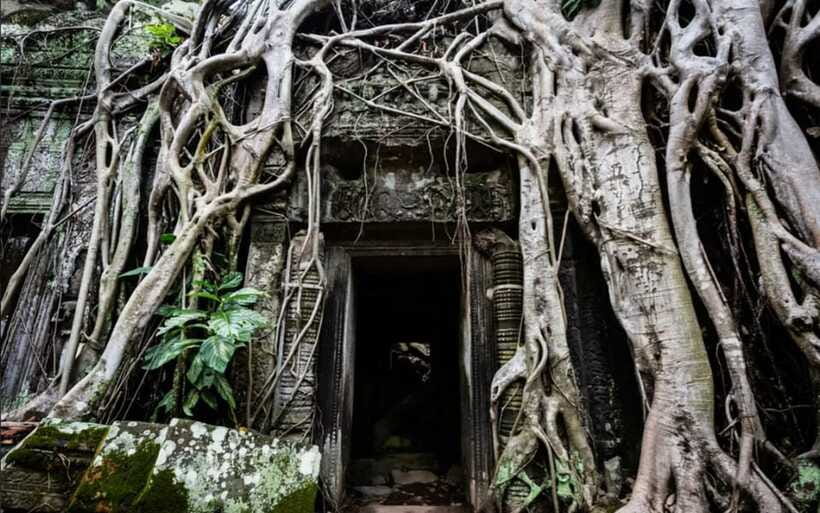
Ta Prohm is the most theatrical stop. Large trees grow around the temple walls, with roots gripping and pressing against the stone. The combination of carved doorways, collapsed sections, and heavy tree roots gives the site a mood that is very different from the formal symmetry of Angkor Wat.
The visit is scheduled for about two hours, which is generous compared with many quick temple loops. You’ll have time to see the better-known tree-covered sections and listen to the guide explain the temple’s place in the reign of Jayavarman VII.
Ta Prohm can be crowded, especially around the most photographed doorways. The long visit gives your guide some room to adjust the route, but a shared group still has to move together. If you want to linger for photographs or study less famous corners, ask about the private option.
The ground can be uneven, and the roots and stones require attention. This is not a place for rushing. I would keep your hands free, watch your footing, and save some energy for Banteay Kdei, the final temple visit.
Banteay Kdei and the quieter finish
Banteay Kdei was built by King Jayavarman VII in the late 12th century. It is often included in the same broad period of Khmer construction as Ta Prohm, and the two sites make a useful comparison.
Ta Prohm feels famous and dramatic. Banteay Kdei is generally presented as a more restrained final stop, with its own galleries, gateways, and worn stone details. The supplied schedule does not give a separate duration for Banteay Kdei, so the time available can depend on the group and the day’s pace.
Ending here makes sense. You’ve already seen Angkor Wat’s grand scale, Bayon’s faces, and Ta Prohm’s tree-covered ruins. Banteay Kdei lets you finish with another example of Jayavarman VII’s building program without adding a distant drive or another major climb.
The return to Siem Reap comes after the temple visits, with drop-off available in Krong Siem Reap. The full experience lasts about eight hours, though traffic, crowds, and group timing can affect the exact return time.
What the $6 price really covers
At $6 per person, this is best understood as a low-cost guided transport package, not an all-inclusive day out. The price includes:
- Round-trip hotel transfers
- An English-speaking guide
- Air-conditioned transport
- Bottled drinking water
- A cold towel
It does not include the Angkor admission pass, breakfast, lunch, or other drinks. The one-day pass alone costs $37. A three-day pass is $62, and a seven-day pass is $72. The multi-day passes must be used on consecutive days.
That admission cost changes the total budget. For one person, the tour and one-day pass together come to at least $43 before food. Even so, the transport and guide make the tour inexpensive for a full day around multiple major temples. Hiring separate transport and arranging explanations at each site could cost more, though the exact comparison depends on your group size.
The low advertised price also means you should set realistic expectations. It is a good deal for seeing the main sights with basic support. It may not provide the quiet pace, detailed language coaching, or personal attention of a premium private tour.
Shared group or private group?
The choice between shared and private touring is important here. A shared group keeps the cost low and can be perfectly workable if you mainly want the route, transport, and broad explanations. It also means waiting for other people at gates, photo spots, and meal breaks.
A group of 22 was reported on one booking. That is not unusual for a popular Angkor route, but it can make the guide harder to hear, especially if English is not your first language. The day also feels less flexible. You may have to leave a temple just as you begin to enjoy it.
A private group suits you better if photography, questions, or a slower pace matter. Guide Ounra was praised for helping with photos, finding good viewpoints, and managing the morning well. That suggests the human quality of the guide can shape the day as much as the temples themselves.
The activity is listed as suitable for a private group, but no private price is given in the supplied details. Check the total before booking. If you are traveling with several people, the extra cost may be easier to justify when divided among the group.
Comfort, clothing, and physical demands
You’ll spend much of the day walking over uneven ground and old stone. There are stairs and temple surfaces that can be slippery or awkward, so sturdy footwear is a wise choice. The activity is not considered suitable for people over 70, which reflects the early start, heat, walking, and temple access.
Wear clothing that is respectful for religious monuments and practical for hot weather. Bring a hat, sun protection, and your own water even though bottled water is included. The vehicle is air-conditioned, but most temple time is outdoors or in open stone courtyards.
Alcohol and drugs are not allowed. The itinerary includes breakfast and lunch breaks, but meals and beverages are your responsibility. Food close to the temples can cost more than meals in central Siem Reap, so plan your budget accordingly.
Cancellation is flexible if your plans change: you can cancel up to 24 hours before departure for a full refund. You can also reserve now and pay later, which helps if your temple day depends on weather or other plans.
Who should book this Angkor tour?
I would choose this tour if you have one main temple day in Siem Reap and want to cover the essential sights without arranging transport yourself. The route gives you a strong first look at Angkor Wat, Angkor Thom, Bayon, Ta Prohm, and Banteay Kdei in one organized day.
It is especially suitable for budget-conscious visitors, first-time visitors, and anyone who values a local guide’s explanations. The sunrise timing is a real advantage, and the air-conditioned vehicle matters once the heat rises.
I would hesitate if you dislike early mornings, large groups, or a fixed schedule. You should also reconsider it if you need highly detailed English commentary, since guide communication may vary. In that case, request a private group and confirm who will guide you.
Book it if you want a practical, inexpensive introduction to Angkor and accept the extra cost of the temple pass. Pay more for private touring if personal attention and photography matter more than keeping the base price low.
FAQ
What time is hotel pickup?
Pickup begins at 4:30 AM. You should provide your hotel name and room number by email or WhatsApp before the tour.
Is the Angkor admission pass included?
No. You must buy an Angkor pass separately. A one-day pass costs $37, a three-day pass costs $62, and a seven-day pass costs $72.
What does the $6 tour price include?
The price includes an English-speaking guide, bottled drinking water, round-trip hotel transfers, air-conditioned transport, and a cold towel.
Are breakfast and lunch included?
No. The tour includes breaks for breakfast and lunch, but meals and beverages are not included in the price.
Which temples are visited?
The route includes Angkor Wat, the South Gate of Angkor Thom, Bayon, the Elephant Terrace, the Leper King Terrace, Ta Prohm, and Banteay Kdei.
Can I book a private group?
Yes. A private group option is available. The supplied details do not state the additional private-group price, so check it before booking.
How long does the tour last?
The experience lasts about eight hours, beginning with the early hotel pickup and ending with drop-off in Krong Siem Reap.
Can I cancel the booking?
Yes. You can cancel up to 24 hours in advance for a full refund. The activity also allows you to reserve now and pay later.
Just added around Siem Reap
- Twilight Tastes of Siem Reap Include Dinner★ 5.0 · 13 reviews
- Ultimate Sunrise to Angkor Wat, Angkor Thom and Bayon Temple★ 5.0 · 3 reviews
- Trekking Tour at Phnom Kulen National Park from Siem Reap★ 5.0 · 3 reviews
- Professional Photo Shoot in Angkor Archaeological Park, Siem Reap★ 5.0 · 42 reviews
- Full-Day Private Tour of Angkor Wat with Pick Up★ 5.0 · 12 reviews
- Unveiling 2 Days Private Angkor Wat/Beyond In Sunrise/Sunset Tour★ 5.0 · 48 reviews
- Siem Reap City Tour with War Museum and Killing Field★ 5.0 · 27 reviews
- Private Day Trip to Angkor Temples with Expert Guide★ 5.0 · 4 reviews
Angkor Wat Tours, compared.
Angkor Wat Sunrise or Sunset Tour with Guide from Siem Reap
Read our review →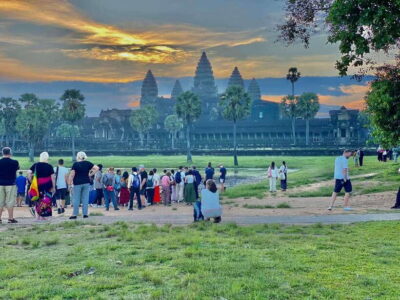
Angkor Wat: Small-Group Sunrise or Sunset Tour
Read our review →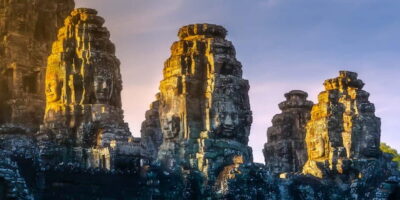
Angkor Wat Highlights and Sunrise Guided Tour from Siem Reap
Read our review →
Angkor Wat Sunrise & 3 Main Temples with Breakfast – Small Group
Read our review →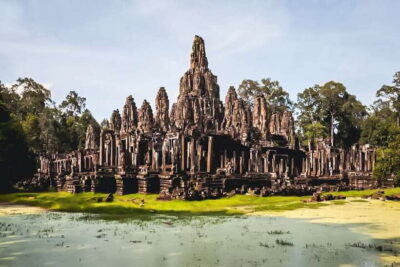
Angkor Wat Sunrise and Full-Day Sightseeing Tour
Read our review →
Angkor Wat Small-Group Exploration with Expert Guide
Read our review →Browse the lists this tour appears in