
Reviewed · ANGKOR WAT TOURS
Angkor Wat 2-Day complex Sun rise & Sun set with Guided Tour
Angkor Wat is most magical at the edges of the day, when dawn colors the towers and late light reaches across the old stone temples. This two-day guided tour pairs sunrise at Angkor Wat with sunset at Phnom Bakheng, while covering 11 temples in the inner and outer circuits.
I like the way the tour splits the sites over two days, giving you more than a rushed look at Angkor Wat itself. I also like the small group of up to 13 people, air-conditioned minibus, cold water, and guides such as Sam, Sayon, John, Nick, and Vone, who are often praised for clear explanations and helpful photos.
The main drawback is the very early first pickup, usually between 4:00 and 4:20 a.m. Several hours can pass before sunrise, and one morning departure left people waiting in darkness. You also need to add the Angkor Archaeological Park pass to the $30 tour price.
Key points before you book
- Sunrise and sunset are built into separate days: Day one begins before dawn at Angkor Wat, while day two finishes at Phnom Bakheng.
- You visit 11 temples: The route includes major sites such as Angkor Wat, Angkor Thom, Bayon, Preah Khan, Ta Som, East Mebon, and Pre Rup.
- Two guides may lead the tour: One guide usually handles each day, with names including Sam, Sayon, John, Nick, Vone, Rith, and Sary appearing in the guide team.
- The $30 price excludes admission: A 1-day park ticket costs $37, while a 2-day or 3-day ticket costs $62.
- The small minibus matters: Air conditioning, cold bottled water, and hotel transfers make the heat easier to handle.
- The pace mixes guidance and free time: You receive temple explanations, photo help, bathroom breaks, and periods to explore on your own.
Why two days works better than one
Angkor is too large for a single quick visit. The famous central temple gets most of the attention, but the surrounding ruins explain how large and ambitious the Khmer empire was.
This tour divides the experience into a small circuit on day one and a larger circuit on day two. That gives you different types of sites: royal city gates, smiling stone faces, jungle-covered walls, reservoir temples, mountain temples, and long galleries carved with religious scenes.
You will not simply be dropped at Angkor Wat and left to wander. An English-speaking guide explains the religious ideas, royal building projects, carvings, and later uses of the temples. The best guides also add details about Cambodian life and culture. Sayon, Sam, John, Nick, Vone, Sary, Rith, Pheap, and others receive especially strong praise for being friendly, clear, funny, and attentive.
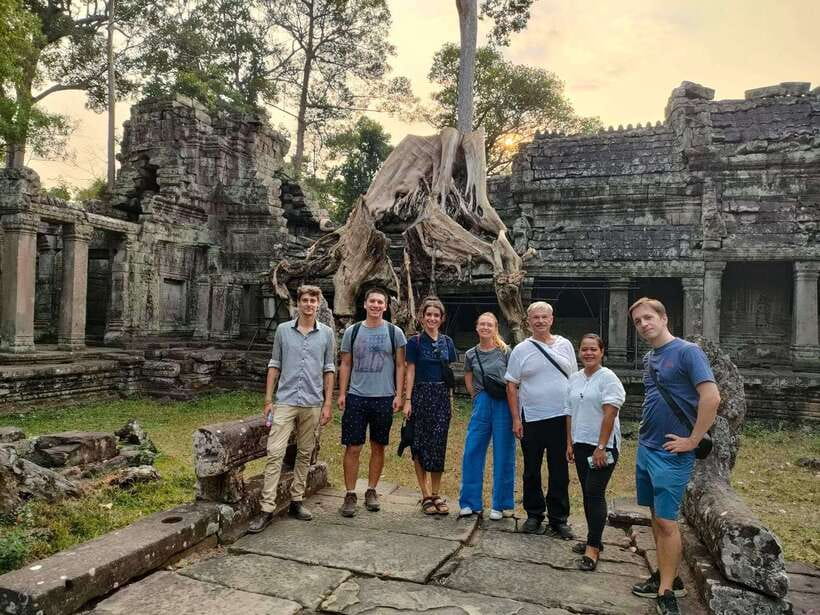
The group size is limited to 13 people, though some groups may feel closer to 10 to 15. That is still far more personal than a large coach tour. You can ask questions, hear the guide without struggling, and receive help with photos. The tradeoff is that you follow a set route and group timetable rather than exploring every temple at your own speed.
More ways to walk into Angkor Wat:
- Angkor Wat Sunrise or Sunset Tour with Guide from Siem Reap
★ 5.0 · 12,109 reviews - Siem Reap: Angkor Wat: Small-Group Sunrise or Sunset Tour
★ 5.0 · 9,444 reviews - Siem Reap: Angkor Wat 2-Day Tour with Sunrise and Sunset
★ 4.9 · 4,429 reviews
Day one begins before sunrise at Angkor Wat
Pickup takes place at your Siem Reap hotel between about 4:00 and 4:20 a.m. You should wait in the lobby 30 minutes before the scheduled time. The driver is expected to hold a sign with your last name, and the vehicle will not wait more than five minutes after pickup time.
The early start is designed to place you at Angkor Wat before the sun appears. In cooler months, this can be a long wait. One departure at 4:30 a.m. left the group standing for around 90 minutes before sunrise, and another visitor felt the winter pickup could have been later. In rainy season, an even earlier start can be less useful if clouds hide the sunrise.
Still, the morning has real advantages. The temperature is kinder, the light is soft, and you avoid some of the worst heat. Bring a hat, sunscreen, water, and a small torch or phone light for uneven paths in the dark. The supplied refreshing towel and chilled water are useful once the walking begins.
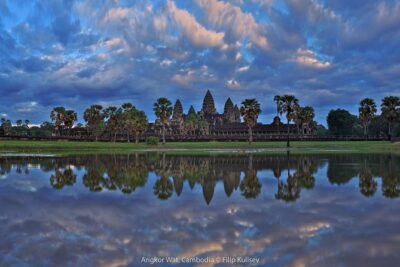
Sunrise itself is never guaranteed to produce perfect colors, but the sight of Angkor Wat’s towers appearing against the brightening sky is worth planning around. You will have time for photos before moving into the temple complex.
Angkor Wat gives you the essential history lesson
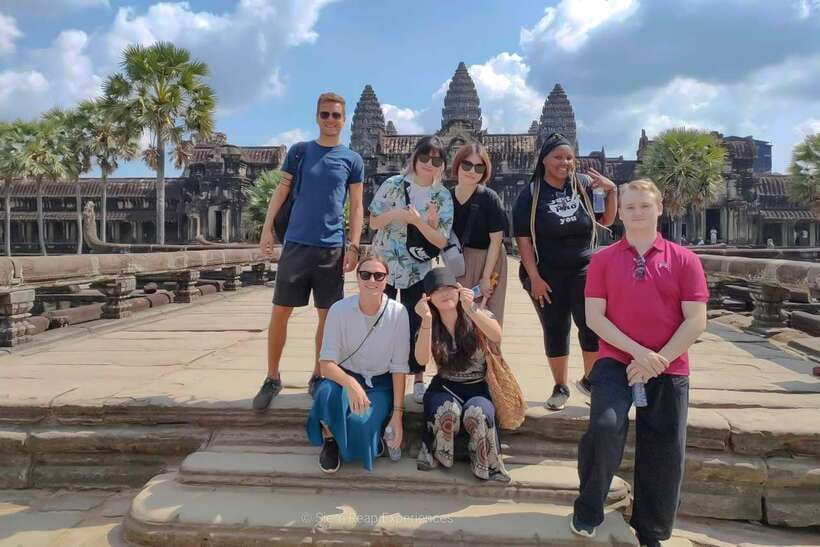
Angkor Wat was built as a Hindu temple and later became a Buddhist site. Its towers, galleries, courtyards, and long carved walls show the scale of Khmer construction and the religious world behind it.
A guide adds value here because the complex can feel confusing without context. You will learn how the temple was laid out, what the carvings represent, and why the central towers mattered. The tour allows time for photography and some independent wandering, so you are not expected to follow the guide every second.
Dress correctly from the start. Your knees and shoulders must be covered at the temples. Long pants are the safest choice, and a sarong can help if you need extra coverage. Short skirts, shorts, and sleeveless shirts are not suitable for this visit.
Angkor Wat is also the busiest and most familiar stop. Expect more people here than at some of the later temples. A good guide can steer you toward better photo spots and explain details away from the largest crowds. Sayon, Nick, and Sam are repeatedly praised for taking photos and helping groups find useful viewpoints.
Angkor Thom and Bayon show royal power
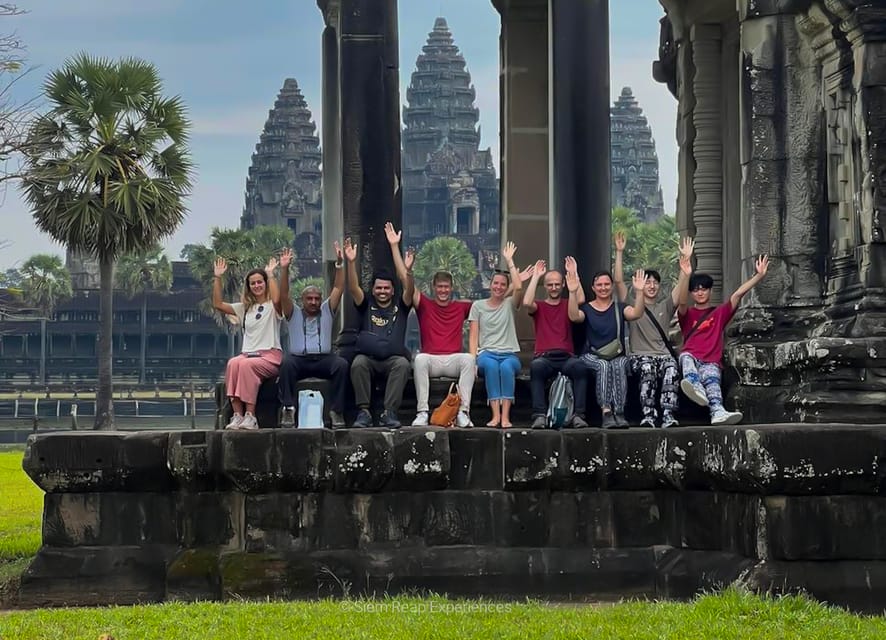
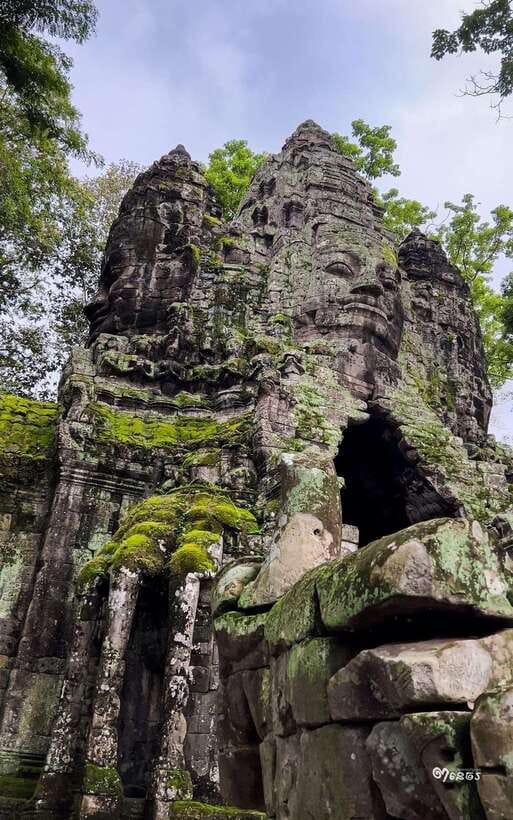
After Angkor Wat, day one continues to Angkor Thom, the old royal city. The enormous entrances and stone faces give the site a different mood from Angkor Wat’s carefully balanced towers.
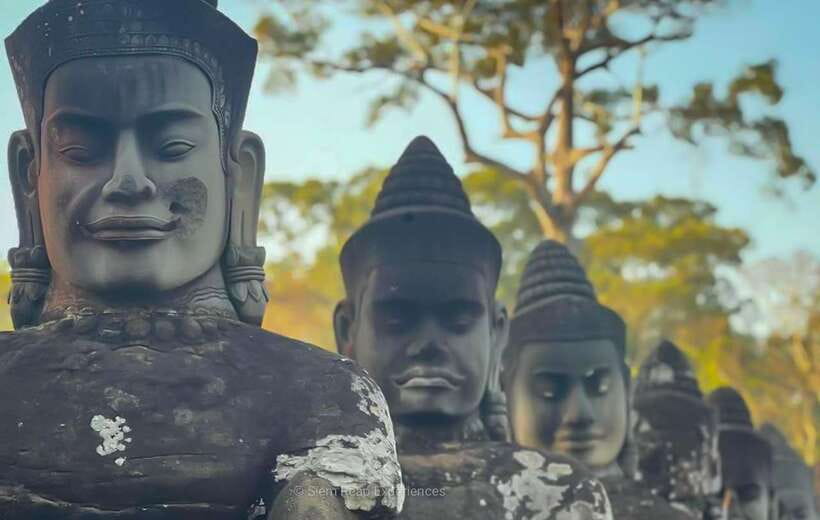
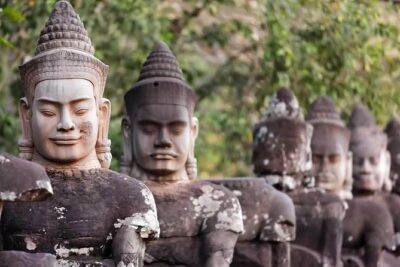
Bayon Temple is the highlight for many people. Its towers carry large, calm smiling faces, looking out over the maze of passages and carved stone. The effect is memorable, but the layout can be hard to follow. Your guide helps you understand where the faces are and how the temple fits into the royal city.
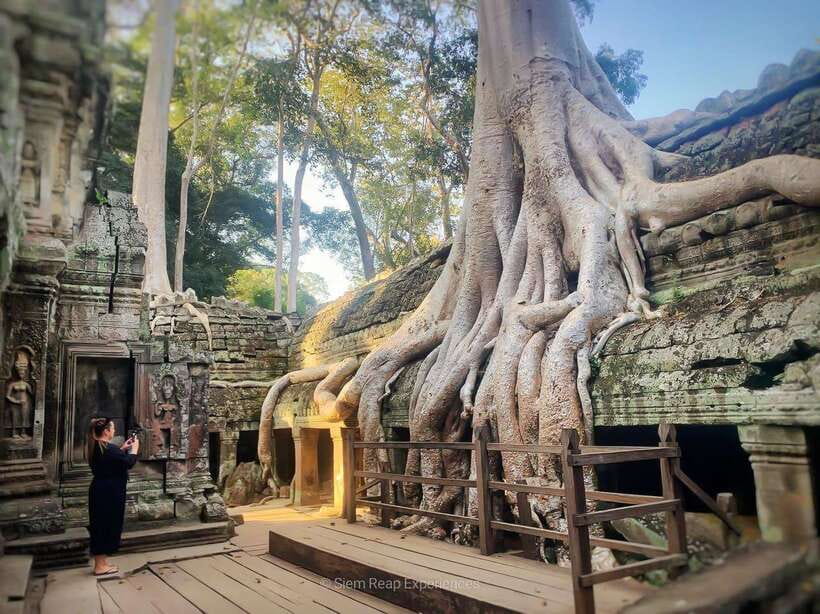
The route also includes a jungle temple associated with the Tomb Raider film. This is one of the most atmospheric parts of the morning, with tree roots and weathered stone adding to the sense of age. Keep your expectations practical: popular film connections bring attention and crowds, but the temple remains impressive for its carvings and the way vegetation has taken hold of the ruins.
A few more Siem Reap half-days worth weighing up
- Angkor 2-Day Sunset & Sunrise Small-Group Tour
★ 5.0 · 2,567 reviews - 2 Days Exclusive Temple Highlights with Sunset and Sunrise Tour
★ 5.0 · 1,157 reviews - Siem Reap: Angkor Sunrise 1- or 2-Day Guided Temples Tour
★ 4.9 · 1,132 reviews - 2 Days Guided Historical Tour in Angkor
★ 5.0 · 855 reviews
Banteay Kdei and Ta Keo add variety
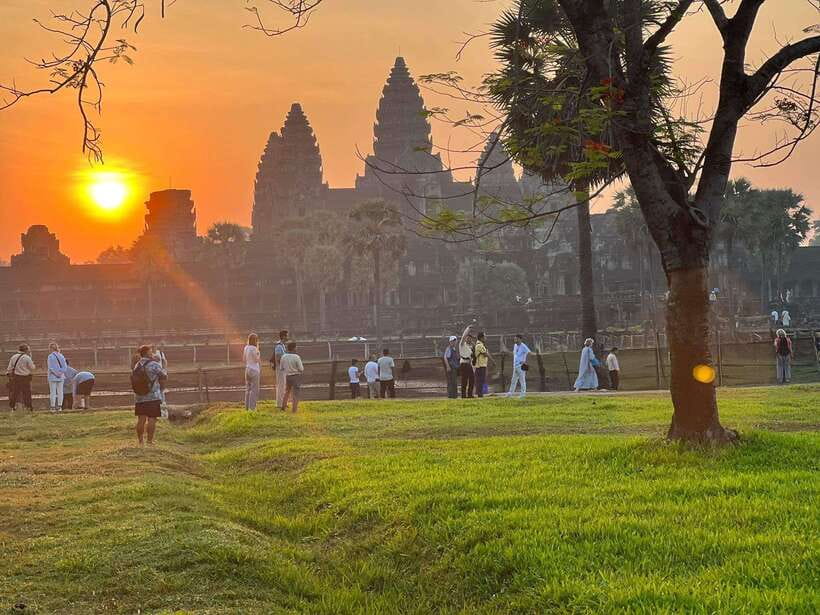
Banteay Kdei is a Buddhist temple with a quieter feel than the main Angkor Wat complex. Monks still use the site, which gives it a living religious connection rather than making it feel like only an archaeological display.
Ta Keo is very different. This 10th-century mountain temple rises in stepped levels, with a strong, simple shape. Climbing and walking here can be tiring, especially after a pre-dawn start and several hours in the heat. Take care on uneven stone and use the minibus breaks to recover.
Day one ends with a return to your accommodation around 1:00 to 1:30 p.m. That timing is useful. You get a full morning at the temples without committing to a second hot afternoon, and you can rest, eat, or swim before the next day.
Breakfast or lunch is available at local restaurants near the temples, but food is not included. One stop received criticism for slow service and incorrect orders, so bring cash and allow for some patience. The tour does include bottled water, but not soft drinks or meals.
Day two takes you beyond the main circuit
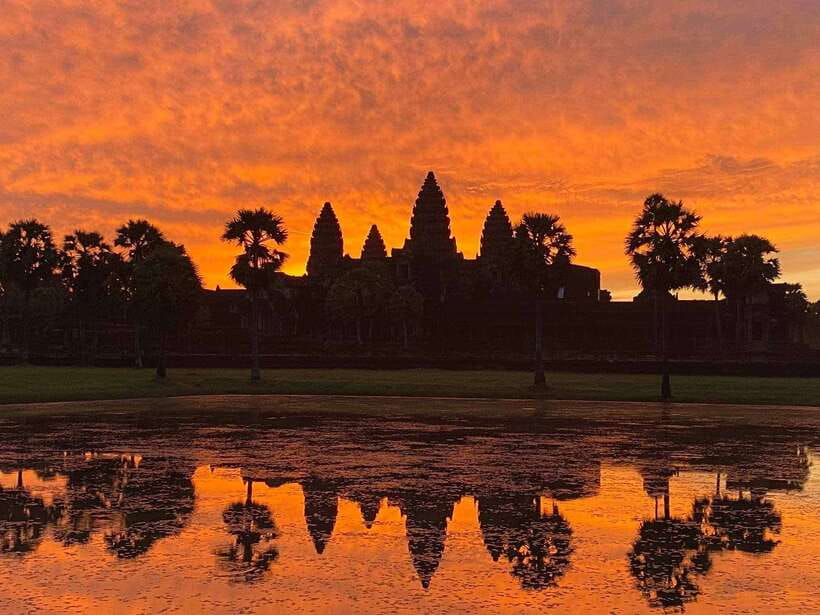
The second pickup is usually between 10:00 and 10:20 a.m., with hotel arrival around 7:00 p.m. This later start is much kinder than day one, though the afternoon heat can be strong.
The first stop is Preah Khan, described as the largest temple on this circuit. Its long corridors and layered ruins reward slow walking. You get a better sense here of how temples were not just single towers, but working religious and social centers with many connected spaces.
Neak Pean is a small island temple reached across a causeway. Water around the island was used for bathing during the Angkor period. The site is compact, so the approach and the story behind the water system are as important as the structure itself.
Ta Som is one of the most photogenic stops. A tree has grown over the East Gate, wrapping the old stonework in roots and branches. It is a good example of the way the jungle has become part of the visual identity of Angkor, though you should still look closely at the carvings and layout rather than treating it as only a photo stop.
East Mebon and Pre Rup explain the outer temples
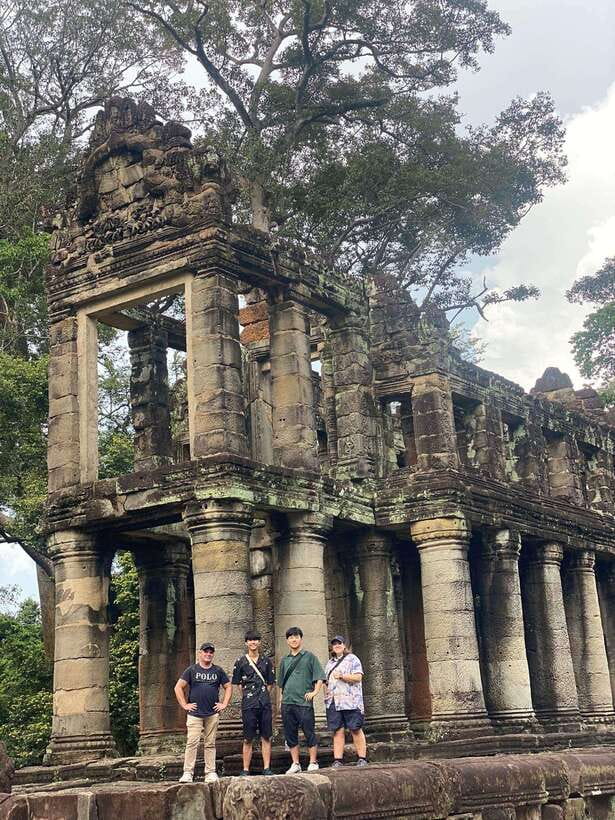
East Mebon once sat on an artificial island in a reservoir. The reservoir is now dry, changing the way you see the temple. What was once an island sanctuary is now surrounded by land, and the original water system is easier to understand when a guide explains how it worked.
Pre Rup is another stone temple with a strong upper level and broad views over the surrounding area. It was used by Hindus to meditate on the full moon. By this stage, you may be hot and tired, but the open structure gives you room to pause before the final climb and sunset stop.
The two-day route works well because these temples do not all look alike. Angkor Wat is grand and carefully ordered. Bayon is crowded with faces. Ta Som is wrapped in trees. East Mebon and Pre Rup show the role of water, height, ceremony, and royal planning.
Sunset at Phnom Bakheng requires patience
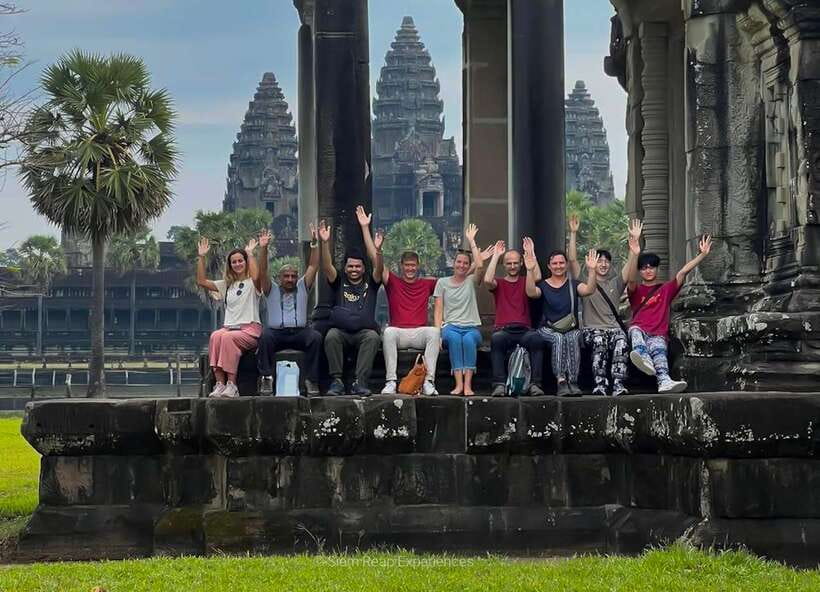
The final stop is Phnom Bakheng, a hilltop temple with 33 towers representing the heavens. Reaching the sunset viewpoint involves a climb, and space can be limited at popular times. You should expect a wait and should not treat the sunset as a guaranteed private moment.
The reward is the view over the temple area as the light fades. After two days of stone corridors and carved faces, the higher viewpoint gives you a broader sense of the scale of Angkor.
This is also the point where fatigue matters most. Wear practical shoes, carry water, and save some energy for the final climb. The group returns to Siem Reap after sunset, so you will likely be ready for dinner and an early night.
What the $30 price really covers
At $30 per person, the tour is good value for transport, two full guided days, hotel pickup and drop-off, an air-conditioned minibus, cold water, a refreshing towel, local tax, and visits to 11 temples.
The park ticket is separate. A 1-day pass costs $37, while a 2-day or 3-day pass costs $62. Since this tour uses two days, budget about $92 per person for the $30 tour plus a 2-day or 3-day pass. You can purchase the ticket online through the official Angkor Enterprise website in advance.
That total is still reasonable if you want transport and a guide. Hiring separate transport, arranging temple transfers, and learning the site history on your own may require more planning. The value is strongest for first-time visitors who want the major temples explained and do not want to negotiate rides in the heat.
Food costs extra, and local restaurant stops may not be equally efficient. Carry cash for meals and drinks, though the included water reduces the need to buy drinks all day.
Who will enjoy this tour most
I would recommend it to first-time visitors to Siem Reap who want a clear overview without spending days arranging individual rides. It suits couples, solo visitors, friends, and families with older children who can manage long walks, heat, stairs, and early mornings.
It is less suitable if you want a slow photographic study of each temple. You will have free time, but this is still a group schedule covering many sites.
The tour is not suitable for babies under one, people over 95, or wheelchair users. Uneven surfaces, temple steps, darkness before sunrise, and the hilltop sunset stop make mobility an important consideration.
Practical advice for a better two days
- Buy the temple pass online in advance, ideally at least one day before the tour.
- Confirm your hotel name and full address carefully. Pickup depends on accurate details.
- Wait in the lobby before the stated pickup window, not outside at the last minute.
- Wear long pants and a shirt covering your shoulders.
- Pack sunscreen, a hat, cash, a camera, and a sarong.
- Bring a small light for the pre-dawn walk.
- Eat before day one or carry a simple snack, since restaurant service may be slow.
- Use the midday return on day one to rest. Do not underestimate the heat.
- Ask your guide about photo locations. Sam, Sayon, Nick, John, Vone, and Sary are frequently praised for taking good pictures.
- Keep expectations realistic for sunrise and sunset. Clouds, crowds, and waiting times are part of the experience.
Free cancellation is available up to 24 hours before the tour, and you can reserve now and pay later. English is the stated tour language.
Should you book the Angkor Wat two-day tour?
Book it if you want the key Angkor temples covered in a practical two-day plan, with an English-speaking guide, hotel transfers, and air conditioning. The sunrise start is hard, but the route gives you a strong first look at both the famous monuments and the quieter outer sites.
Think twice if you dislike group schedules, cannot manage long walks, or want to avoid all pre-dawn starts. For most first-time visitors who value context, convenience, and good photo help, the $30 tour fee offers solid value once you add the separate park pass.
FAQ
Is the Angkor park ticket included in the $30 price?
No. The Angkor Archaeological Park ticket must be purchased separately. A 1-day ticket costs $37, while a 2-day or 3-day ticket costs $62.
What time does day one begin?
Hotel pickup is scheduled between about 4:00 and 4:20 a.m. You should wait in your hotel lobby 30 minutes before the scheduled pickup time.
What time does day two begin?
Day two pickup is scheduled between about 10:00 and 10:20 a.m. Return to your hotel is expected around 7:00 p.m.
Which temples are included?
The route includes Angkor Wat, Angkor Thom, Bayon, Banteay Kdei, Ta Keo, Preah Khan, Neak Pean, Ta Som, East Mebon, Pre Rup, and Phnom Bakheng.
Are meals included?
No. Breakfast, lunch, and soft drinks are not included. Food is available at local restaurants near the temples, and you should bring cash.
What should I wear?
Wear clothing that covers your knees and shoulders. Long pants and a shirt with sleeves are suitable, and a sarong can provide extra coverage.
Is hotel pickup included?
Yes. Pickup and drop-off from accommodation in Siem Reap are included. Provide the correct hotel name and address, and wait in the lobby before pickup.
Just added around Siem Reap
- Twilight Tastes of Siem Reap Include Dinner★ 5.0 · 13 reviews
- Ultimate Sunrise to Angkor Wat, Angkor Thom and Bayon Temple★ 5.0 · 3 reviews
- Trekking Tour at Phnom Kulen National Park from Siem Reap★ 5.0 · 3 reviews
- Professional Photo Shoot in Angkor Archaeological Park, Siem Reap★ 5.0 · 42 reviews
- Full-Day Private Tour of Angkor Wat with Pick Up★ 5.0 · 12 reviews
- Siem Reap City Tour with War Museum and Killing Field★ 5.0 · 27 reviews
- Unveiling 2 Days Private Angkor Wat/Beyond In Sunrise/Sunset Tour★ 5.0 · 48 reviews
- Private Day Trip to Angkor Temples with Expert Guide★ 5.0 · 4 reviews
Angkor Wat Tours, compared.
Angkor Wat Sunrise or Sunset Tour with Guide from Siem Reap
Read our review →
Angkor Wat: Small-Group Sunrise or Sunset Tour
Read our review →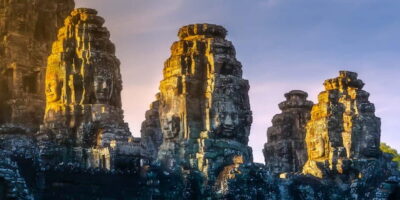
Angkor Wat Highlights and Sunrise Guided Tour from Siem Reap
Read our review →
Angkor Wat Sunrise & 3 Main Temples with Breakfast – Small Group
Read our review →
Angkor Wat Sunrise and Full-Day Sightseeing Tour
Read our review →
Angkor Wat Small-Group Exploration with Expert Guide
Read our review →Browse the lists this tour appears in