
Reviewed · ANGKOR WAT TOURS
From Siem Reap: Angkor Wat and Floating Village 3-Day Trip
Angkor Wat may be the headline, but this tour gives you much more than one famous temple. You move from the carved faces of Bayon to the tangled roots of Ta Prohm, then out into rice country, palm-sugar villages, and the stilted world of Kampong Phluk. I like the private format and the way the days mix major sights with quieter temples such as Beng Mealea and Preah Khan.
I also like the steady practical care: drivers keep the air-conditioned vehicle clean, and cold water and cool towels are ready after temple walks. Guides including Phanne, Sean, Sam, and Makara have been praised for clear English, local insight, and help with photographs. The main drawback is the pace and heat. A 4:40 am pickup on the final day, long walks, and temperatures that can reach 40 degrees demand stamina.
Key points at a glance
- Three different sides of Siem Reap: See royal temples, rural villages, and life on Tonle Sap rather than spending all three days inside one archaeological park.
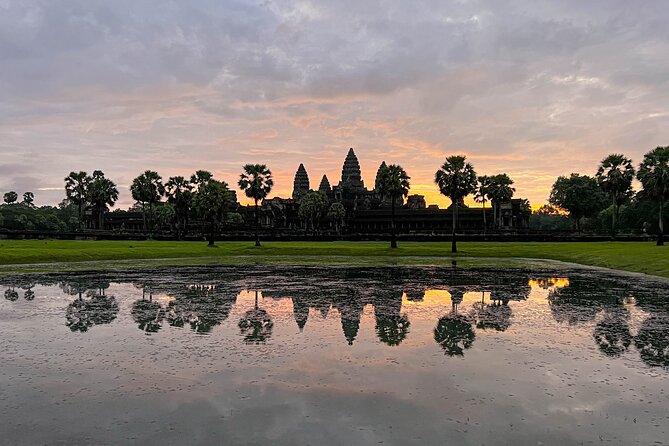
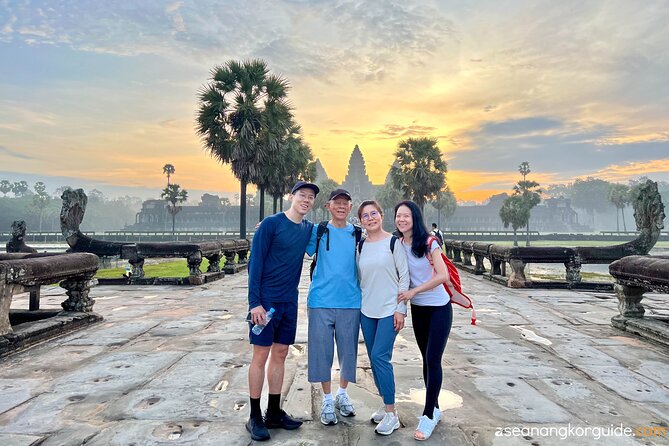
- Sunrise at Angkor Wat: The final morning begins before dawn, with a takeaway breakfast packed by your hotel.
- Beng Mealea adds adventure: This partly overgrown temple feels more rugged than the polished central monuments and involves crawling and uneven movement.
- Kampong Phluk is a real working community: A local boat takes you past fishing homes on tall poles, flooded forest, and a Buddhist monastery.
- Private transport matters: Your driver waits with chilled water and towels while you walk in the heat, then returns you to your hotel each day.
- Budget beyond the headline price: The $180 tour fee does not include the three-day Angkor pass, the $15 Tonle Sap boat ticket, meals, drinks, or personal spending.
Three days that connect temples and daily life
This is a strong choice if you want a broad introduction to the Siem Reap area without arranging separate cars, guides, and boats. The plan covers the best-known temples, more distant ruins, countryside stops, and Tonle Sap in one package.
It is also a useful format for first-time visitors who want context. A good guide can explain the difference between Hindu and Buddhist imagery, point out how temples were used, and connect the stone monuments with present-day Cambodian life. The guides assigned to this tour vary, but names praised for their warmth and temple knowledge include Ms. Phanne, Sean, Sam, Veasna, Seila, Saroun, David, Mony, and Makara.
The private group setup gives you some room to ask questions and adjust the pace. One couple arranged an additional visit to Kulen Mountain and its waterfall for a separate charge, so modest changes may be possible if you discuss them ahead of time. Do not assume every request is included in the $180 price.
More ways to walk into Angkor Wat:
- Angkor Wat Sunrise or Sunset Tour with Guide from Siem Reap
★ 5.0 · 12,109 reviews - Siem Reap: Angkor Wat: Small-Group Sunrise or Sunset Tour
★ 5.0 · 9,444 reviews - Siem Reap: Angkor Wat 2-Day Tour with Sunrise and Sunset
★ 4.9 · 4,429 reviews
Day one: Angkor Thom, Bayon, and Angkor Wat
Pickup begins at 8:00 am from your accommodation. Before entering the archaeological park, you stop to buy the three-day Angkor pass. That pass costs $62 per person and is not included in the tour price, so keep this extra charge in mind from the start.
The morning centers on Angkor Thom, the last ancient capital of the Khmer Empire. Its name means gigantic city, and the scale is easier to grasp once you move among its temples and former royal areas. The stop is not just one building. You visit Bayon, the Terrace of the Elephants, the Royal Palace area, the Terrace of the Leper King, and Baphuon.
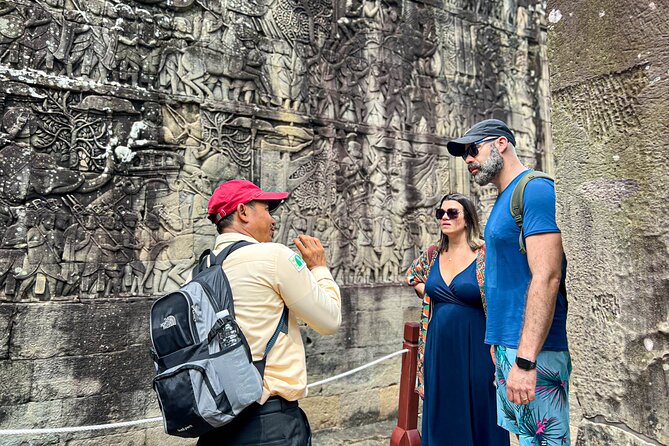
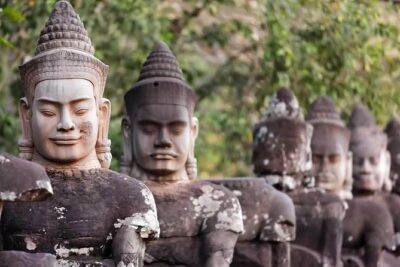
Bayon is the visual star here. Its towers carry enormous serene faces, and a guide can help you read the carvings beyond the famous expressions. The Terrace of the Elephants and the Terrace of the Leper King are more open, so the sun can feel strong. Listen closely during these stops, since the historical details help turn a succession of stone walls into a picture of court life and public ceremony.
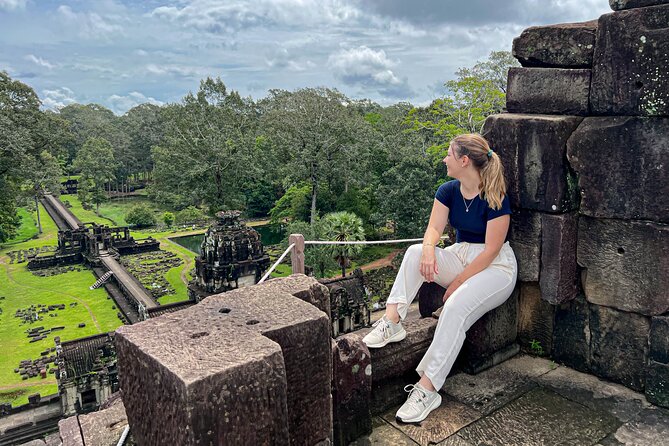
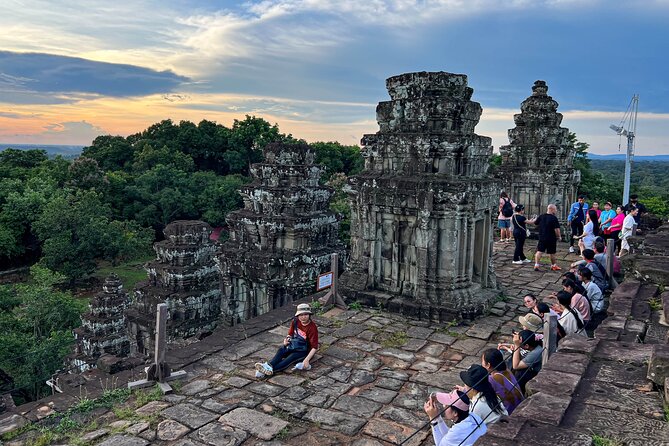
Baphuon is considered the largest Hindu temple in Angkor Thom. Its long raised causeway and tall central structure give it a different feel from Bayon. You should expect stairs, uneven surfaces, and plenty of walking throughout the morning.
Lunch is at a local restaurant opposite Angkor Wat. Food and soft drinks are not included, but this location gives you a useful break before the afternoon visit. It also means you can keep the day moving without returning to Siem Reap.
After lunch comes Angkor Wat, the monument most people have been waiting for. The temple is vast, and seeing it after Angkor Thom helps you notice its careful symmetry and scale. Take time with the galleries, towers, courtyards, and carved scenes instead of treating the visit as a quick photo stop.
The plan also offers sunset at Phnom Bakheng. You need to reach the top before 4:30 pm for the best chance of getting a place, and this is an optional choice within the day rather than a guarantee of a sunset viewing. Since the day already includes substantial walking, you may prefer a slower finish at Angkor Wat.
Day two: Banteay Srei, palm sugar, and Beng Mealea
Day two begins at 8:00 am in a private air-conditioned car or minivan. The drive to Banteay Srei takes you through rural villages, rice paddies, and traditional homes. This is one of the tour’s best changes of scene because you see Cambodia beyond the temple zone.
At Phum Preah Dak, you stop to learn how local people make palm cake and palm sugar. It is a small but worthwhile addition. Instead of only looking at ancient stone, you get a glimpse of a food tradition connected to the countryside and local work.
Banteay Srei is often called the ladies temple. Its pink sandstone carvings are unusually fine, and the smaller scale makes the details easier to study. This is a good place to let your guide point out figures, floral patterns, and religious scenes. The temple sits farther from the main Angkor group, so the drive is part of the experience, not wasted time.
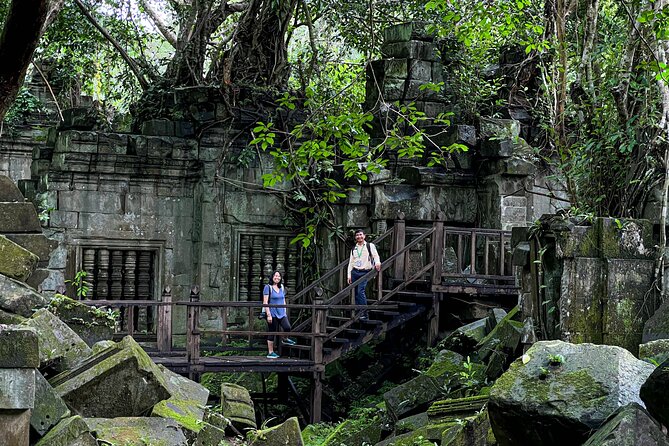
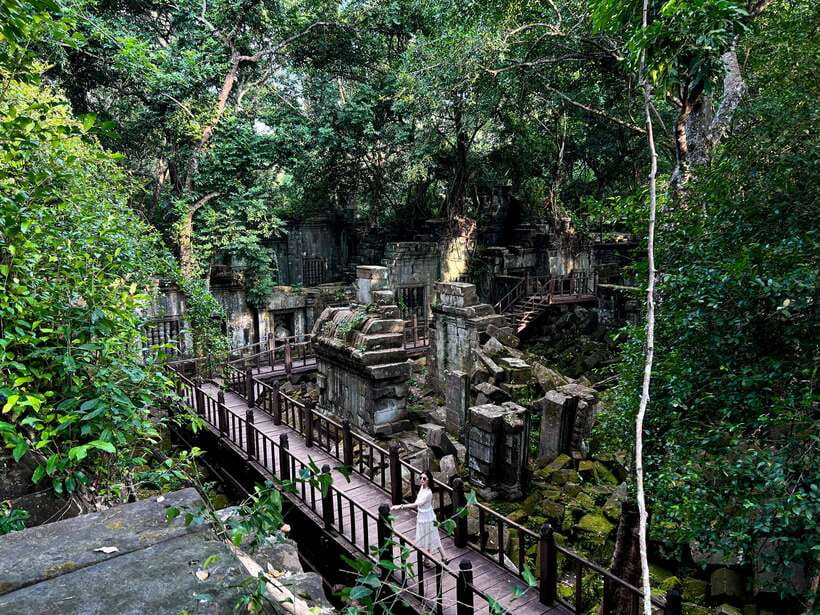
Next comes Beng Mealea, the lost temple in the rainforest. Its appeal is its rougher condition and overgrown setting. Roots, collapsed stones, and broken galleries give the site a more adventurous feel than the carefully presented monuments near Angkor Wat.
The tradeoff is comfort. The visit involves crawling and uneven movement, so wear shoes with a firm grip and avoid clothing that restricts your movement. Beng Mealea is not the easiest temple for anyone who wants flat paths and short walks, but it may be the most memorable stop for people who enjoy ruins with a strong sense of age and disorder.
After lunch at a local restaurant, the route continues to the Roluos Group. Bakong and Lolei are the two named temples on this schedule. Bakong is especially useful for understanding the early development of Khmer temple design, while Lolei adds an older brick-temple setting to a day already filled with pink sandstone and jungle ruins.
Kampong Phluk and the changing waters of Tonle Sap
Later on day two, you drive about 21 kilometers from Siem Reap to Kampong Phluk, a flooded and fishing village on Tonle Sap Lake. The boat ticket and private boat cruise cost $15 per person and are separate from the tour fee.
At the port, you board a local boat to see homes built on long poles along the lake shore. The high structures help families cope with seasonal water changes. Fishing is central to local life, and the boat gives you a view of homes, waterways, and daily work from the water rather than from a roadside.
The surrounding flooded mangrove forest is another reason to take this part seriously. The area is home to crab-eating macaques and about 3,000 inhabitants. The exact feel of the ride will depend on water levels and conditions, but the setting changes greatly from the stone temples of the morning.
You also visit a Buddhist monastery built on an artificial island before returning to Siem Reap. This portion is valuable because it shows a living community rather than an abandoned royal center. Still, keep expectations practical. You are seeing a working fishing village, not a staged cultural show, and the lake visit may feel less dramatic in some seasons than in others.
More floating-village afternoons:
- From Siem Reap: Kampong Phluk Floating Village Tour by Boat
★ 4.9 · 6,979 reviews - Sunset tour of Kampong Phluk stilts home village on the Tonle Sap
★ 5.0 · 4,865 reviews - Siem Reap: Kampong Phluk Floating Village Tour with Boat
★ 4.9 · 3,843 reviews - Siem Reap Floating Village Kampong Phluk Sunset with Boat
★ 5.0 · 1,962 reviews
Day three: sunrise, Ta Prohm, and quieter temples
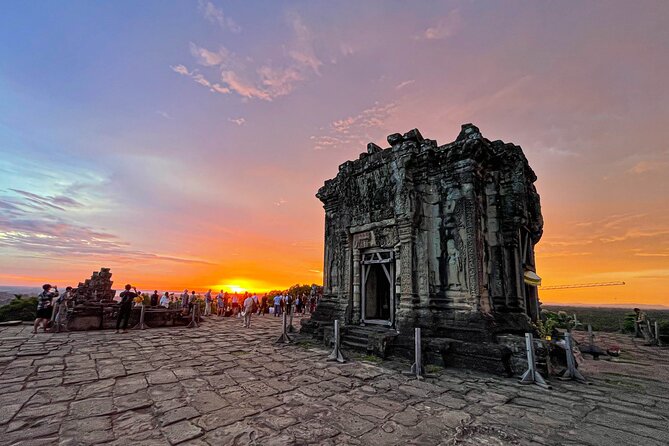
The final day begins at 4:40 am. Ask your hotel to prepare a takeaway breakfast, since the early pickup leaves little time for a proper meal. This is the hardest start of the tour, but it gives you the chance to see Angkor Wat before the day becomes hot.
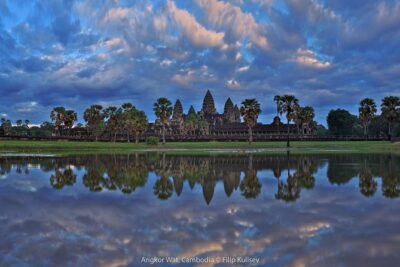
The sunrise visit is a major highlight, though weather and cloud cover decide how spectacular the sky looks. After the early start, the route aims to avoid some of the busiest periods at Ta Prohm, the jungle temple made famous by its appearance in Tomb Raider.
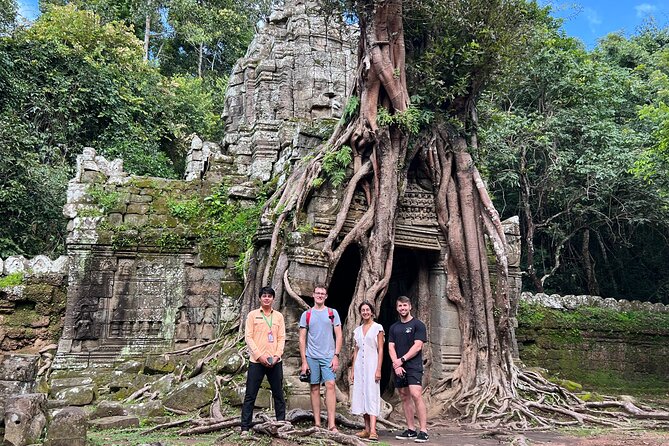
Ta Prohm is popular for good reason. Trees grip the stone, galleries open into shadowy courtyards, and the boundary between temple and forest is unusually clear. The famous roots are only part of the site. Look for carved doorways, enclosed passages, and smaller details that are easy to miss when everyone is focused on the largest tree-covered walls.
The day continues to Preah Khan, sometimes called the father temple, followed by Neak Pean and Ta Som. Preah Khan gives you another large complex to explore, while Neak Pean has a distinctive water-centered design. Ta Som is known for its tree-covered features and offers another close look at nature reclaiming old stone.
East Mebon is a tenth-century brick temple, a welcome change from the sandstone monuments. Pre Rup, associated with royal cremation, brings the temple circuit to a strong finish. These later stops are not as famous as Angkor Wat or Ta Prohm, but they give you a better sense of the variety within the Angkor area.
You return to your hotel after Pre Rup. Because the final morning starts so early, do not plan an important afternoon commitment until you know how your energy holds up.
Guides, drivers, and the private-tour advantage
The strongest part of this experience is the human service. The guide changes depending on availability, but the names attached to particularly strong outings include Phanne, Sean, Sam, Saroun, David, Veasna, Seila, Mony, and Makara.
Ms. Phanne has been praised for combining detailed temple explanations with a warm view of Cambodian culture. Sean is noted for strong English and an easy manner during long drives. Makara has helped with photographs and pointed out less obvious rooms and angles. Seila is also known for finding good photo positions. These details matter because three days of temples can blur together without a guide who varies the explanations and notices what interests you.
The drivers receive similar praise for careful driving, punctual pickups, clean cars, chilled water, and fresh towels. Mr. Tha, Mr. Ouk, Mr. Kim, Mr. Khim, Mr. Sky, Chantrea, and Khanny are among the names associated with especially attentive service.
Private transport is not a luxury extra here. It is a practical shield from the heat. You walk among exposed stones, return to air conditioning, drink water, and cool off with a towel before the next stop. The vehicle also gives you flexibility to ask questions or request a small adjustment, subject to time and extra fees.
Price, extras, and daily comfort
The advertised tour price is $180 per person. Add the $62 three-day Angkor pass and the $15 Tonle Sap boat ticket, bringing the known total to $257 per person before meals, soft drinks, and personal expenses.
That is not a cheap temple transfer, but the value is reasonable if you want three full days with a private vehicle, hotel pickup and drop-off, an English-speaking guide, and a planned route covering distant sites. You are also paying for the driver waiting through long visits rather than arranging separate transport to Banteay Srei, Beng Mealea, and Kampong Phluk.
Food is not included, so budget for three days of lunches and drinks. Local restaurants are used along the route, and several guides have helped visitors try Cambodian dishes. If you have strong food preferences, ask your guide about the lunch choices each day.
The practical rules are simple. Wear clothing that covers your shoulders, chest, and knees. Bring comfortable shoes, sunscreen, insect repellent, a hat, and a camera. Sleeveless shirts, alcohol, and drugs are not allowed. Most of the year is very hot, and umbrellas are provided during the rainy season.
Who should book this three-day route
I would choose this tour if you want Angkor’s major sights but also care about rural Cambodia and Tonle Sap. It suits first-time visitors who prefer having the route, tickets, driving, and historical explanations handled in one plan.
It is less suitable if you dislike early mornings, long temple walks, uneven ground, or hot weather. The schedule is well filled, and Beng Mealea requires more physical effort than a simple paved sightseeing stop.
The private format works especially well for couples, families, and solo visitors who want to ask questions without keeping pace with a large group. Solo travelers can also benefit from the guide taking photographs, a detail several guides have made part of their service.
Should you book it?
Book it if you want a broad, well-supported Siem Reap experience rather than a quick Angkor Wat visit. The mix of Angkor Thom, Angkor Wat, Ta Prohm, Banteay Srei, Beng Mealea, Roluos, and Kampong Phluk gives you temples, countryside, forest, and lake life in one trip.
Skip it if your main goal is a slow, minimalist temple visit with plenty of free time. For everyone else, the private car, attentive drivers, strong English-speaking guides, and thoughtful route make the $180 base price a fair starting point, as long as you add the pass, boat, food, and drinks to your budget.
FAQ
Is the Angkor pass included in the tour price?
No. The three-day Angkor pass costs $62 per person and is purchased before entering the archaeological park.
Is the Kampong Phluk boat ticket included?
No. The Tonle Sap lake ticket and private boat cruise cost $15 per person.
What language does the guide speak?
The live tour guide speaks English.
Is transportation private?
Yes. The tour includes private transportation by air-conditioned car or minivan, plus hotel pickup and drop-off.
What time does the sunrise day begin?
Pickup for the sunrise visit is at 4:40 am. You should ask your hotel to pack a takeaway breakfast.
What should I wear at the temples?
Wear clothing that covers your shoulders, chest, and knees. Comfortable shoes are important because the tour includes substantial walking and uneven temple surfaces.
Can I cancel the tour?
You can cancel up to 24 hours in advance for a full refund. You can also reserve now and pay later, subject to availability.
Just added around Siem Reap
- Twilight Tastes of Siem Reap Include Dinner★ 5.0 · 13 reviews
- Ultimate Sunrise to Angkor Wat, Angkor Thom and Bayon Temple★ 5.0 · 3 reviews
- Trekking Tour at Phnom Kulen National Park from Siem Reap★ 5.0 · 3 reviews
- Professional Photo Shoot in Angkor Archaeological Park, Siem Reap★ 5.0 · 42 reviews
- Full-Day Private Tour of Angkor Wat with Pick Up★ 5.0 · 12 reviews
- Unveiling 2 Days Private Angkor Wat/Beyond In Sunrise/Sunset Tour★ 5.0 · 48 reviews
- Siem Reap City Tour with War Museum and Killing Field★ 5.0 · 27 reviews
- Private Day Trip to Angkor Temples with Expert Guide★ 5.0 · 4 reviews
Angkor Wat Tours, compared.
Angkor Wat Sunrise or Sunset Tour with Guide from Siem Reap
Read our review →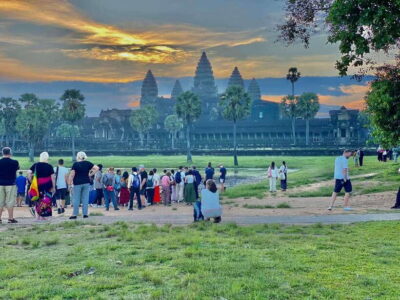
Angkor Wat: Small-Group Sunrise or Sunset Tour
Read our review →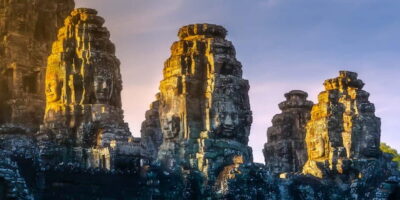
Angkor Wat Highlights and Sunrise Guided Tour from Siem Reap
Read our review →
Angkor Wat Sunrise & 3 Main Temples with Breakfast – Small Group
Read our review →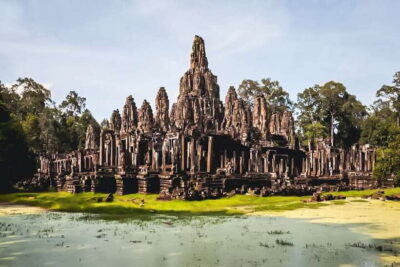
Angkor Wat Sunrise and Full-Day Sightseeing Tour
Read our review →
Angkor Wat Small-Group Exploration with Expert Guide
Read our review →Browse the lists this tour appears in