
Reviewed · ANGKOR WAT TOURS
Siem Reap: 2-Day Private Angkor Wat & Angkor Temples Tour
Angkor is too large for a rushed one-day visit, and this tour gives you time to see both its famous temples and its quieter outer circuit. You begin with the South Gate, Bayon, Ta Prohm, and Angkor Wat, then return for Preah Khan, Banteay Srei, and several less-famous sites.
I like the private format, which lets you ask questions, set your pace, and stay with your own group. I also like the practical touches, especially hotel pickup, cold water, towels, and guides who can work in seven languages. Guides named in past bookings include Visla, Rat, Raf, Sovuth, and Vincent Bross.
The main drawback is cost planning. The $245 price covers up to two people, but each adult also needs a $62 Angkor pass, and lunch is extra. Day 1 uses a tuk-tuk for one or two people, while Day 2 uses a private car.
Key points to know before you book
- Two full days cover different temple circuits: Day 1 focuses on Angkor Thom, Bayon, Ta Prohm, and Angkor Wat, while Day 2 reaches the Grand Circuit and Banteay Srei.
- A 5:00 AM sunrise option is available: You can begin Day 2 early and finish around noon instead of following the regular 4:00 PM finish.
- The $245 price is for up to two people: Temple admission is separate at $62 per person for a two or three-day pass.
- Transport changes by group size: One or two people use a tuk-tuk on Day 1 and a private car on Day 2; larger groups use an air-conditioned van or bus.
- The guide can speak your language: English, Spanish, Portuguese, Italian, French, German, and Japanese are offered.
- Temple clothing rules are strict: Bring clothing that covers your shoulders and knees, with extra care required at Angkor Wat.
Why two days is the right amount of time for Angkor
Angkor is not one temple. It is a vast archaeological park with major monuments spread across several routes. A single day can cover Angkor Wat and a few nearby temples, but it leaves little room for the outer circuit or for stopping to understand what you are seeing.
This two-day plan has a sensible shape. The first day handles the best-known monuments on the Small Circuit. The second day moves through the Grand Circuit and ends at Banteay Srei, a smaller temple well outside the central group.
You get a private guide rather than a large mixed group. That matters at Angkor because the difference between looking at carved stone and understanding it is often one good explanation. A guide can point out the meaning of the faces at Bayon, explain how Angkor Wat was arranged, and help you notice the small details at Banteay Srei.
The normal start is 8:30 AM from your hotel lobby. You then go to the ticket booth to buy the temple pass, unless you arrange it online before the tour. If you want a cooler start and sunrise, choose the special Day 2 option when booking.
More Private Tours in Siem Reap
- Full-Day Angkor Wat Sunrise Private Tour with Guide from Siem Reap
★ 5.0 · 2,920 reviews - Siem Reap: Angkor Wat Private Tuk-Tuk Tour
★ 4.9 · 2,222 reviews - Angkor Wat Private Day Tour from Siem Reap
★ 5.0 · 834 reviews
Day 1: entering Angkor Thom through the South Gate
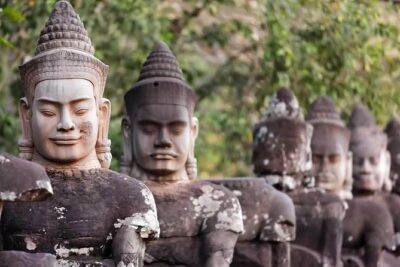
Your first major stop is the South Gate of Angkor Thom. The approach gives you an immediate sense of scale, with a broad entrance and giant stone faces looking down from the gate towers.
This is a strong opening because it introduces the city as more than a collection of isolated ruins. Angkor Thom was a major walled city, and the gate helps you understand that the temples belonged to a large urban and religious center.
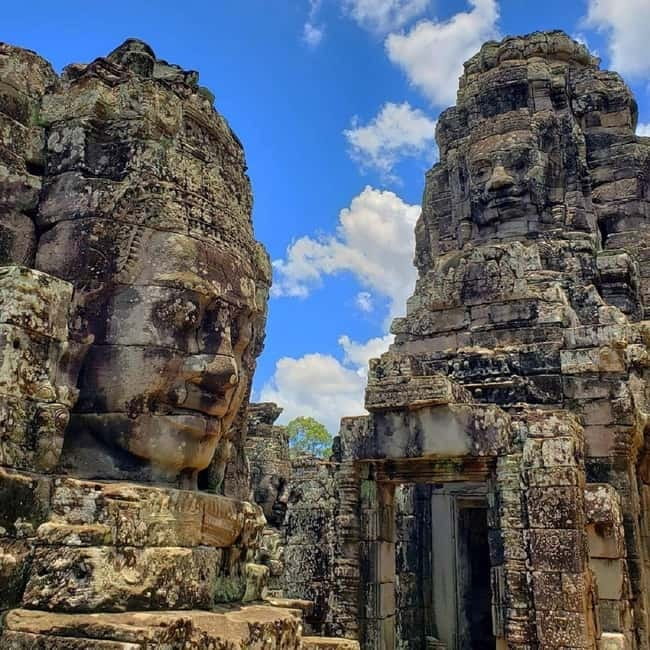
From there, you continue to Bayon, one of the most memorable places in Angkor. Its towers carry serene carved faces, and the temple feels especially rewarding with a guide who can explain how the structure was planned and what the carvings represent.
Bayon is also a place where a slow pace pays off. You will move through narrow passages and around towers that can look confusing at first. Give yourself time to look up and around rather than treating it as a quick photo stop.
The Terrace of the Elephants and the Terrace of the Leper King follow. These long carved platforms once formed part of the ceremonial heart of Angkor Thom. The reliefs reward close attention, so this is another point where a guide adds more than simple directions.
Ta Prohm and the power of atmosphere
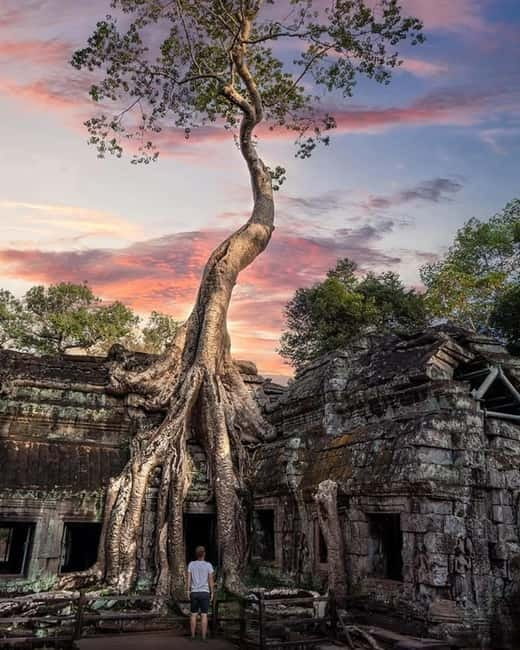
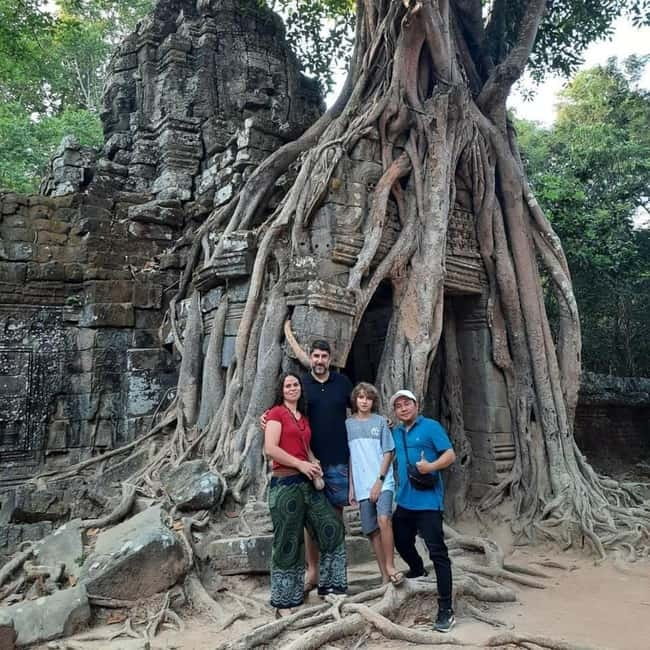
Ta Prohm is the temple many people recognize from photographs, with large tree roots winding through stone walls. It has a dramatic appearance, but the appeal is not only visual.
The temple gives you a clear sense of how nature and architecture have interacted over time. Stone galleries, fallen blocks, doorways, and tree roots create a setting that feels different from the ordered scale of Angkor Wat and the many-faced towers of Bayon.
The practical warning is that Ta Prohm can feel crowded and uneven underfoot. Wear shoes with a good grip, take care on steps, and do not expect to move quickly through every passage.
Lunch is not included. You stop at a nearby restaurant for a Cambodian meal, so bring cash and allow room in your budget. Drinks beyond the supplied water are also extra.
Angkor Wat in the afternoon
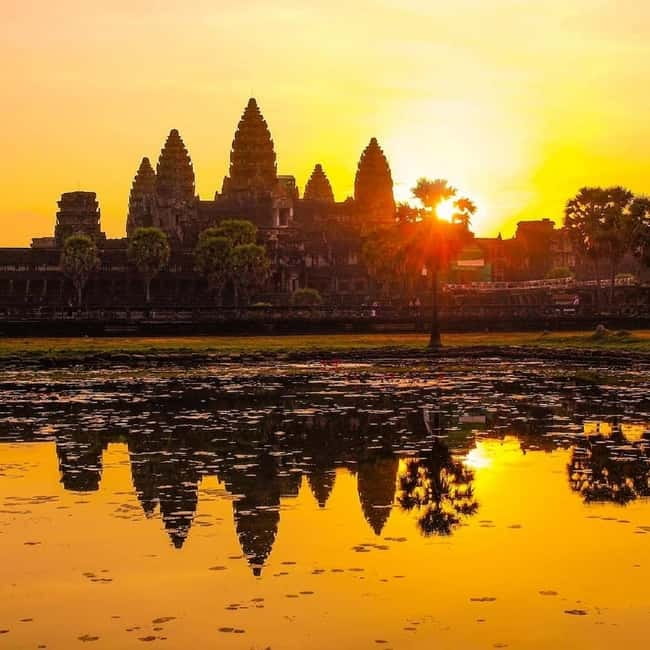
The first day finishes at Angkor Wat, the largest religious monument in the world. Its scale can be hard to grasp at first, so the guide’s explanation of its art, layout, and symbolism is useful.
The temple is more than a famous silhouette. You can expect long galleries, carved scenes, towers, courtyards, and a layout designed around religious ideas. A guide can help you connect these details instead of seeing them as a long series of walls and doorways.
The afternoon timing means you see Angkor Wat after visiting several other temples. That has a benefit: you already have some context for Khmer architecture and temple planning. It also means you should be ready for heat and fatigue by this point in the day.
The first day ends around 5:00 PM, followed by a return to your hotel. That full schedule is useful, but it is not light. Comfortable clothing, a hat, sunglasses, insect repellent, and drinking water are sensible choices. Cold water and a towel are provided during the tour, a small but welcome help in Cambodia’s heat and humidity.
More ways to walk into Angkor Wat:
- Angkor Wat Sunrise or Sunset Tour with Guide from Siem Reap
★ 5.0 · 12,109 reviews - Siem Reap: Angkor Wat: Small-Group Sunrise or Sunset Tour
★ 5.0 · 9,444 reviews - Siem Reap: Angkor Wat 2-Day Tour with Sunrise and Sunset
★ 4.9 · 4,429 reviews - Siem Reap: Full-Day Angkor Wat Guided Tour with Sunset
★ 4.9 · 3,803 reviews
Day 2: the Grand Circuit’s quieter rhythm
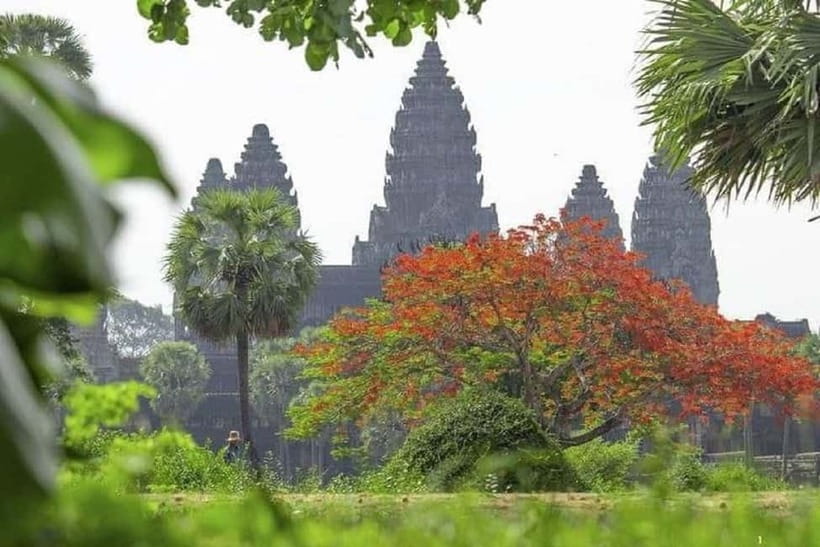
The second day begins with Preah Khan. This large monastic complex has long corridors, carved details, and a more enclosed feeling than Angkor Wat.
Preah Khan is a good place to start the Grand Circuit because it gives you room to focus on smaller details. Instead of only chasing the most famous view, you can look at door frames, galleries, and the way the temple unfolds from one section to the next.
Next comes Neak Pean, a small temple surrounded by pools. Its setting gives the stop a calmer mood, and its compact size makes it a welcome change after larger temple complexes.
Ta Som follows. Its tree-covered gate is the main visual draw, but the charm comes from the combination of a modest temple plan and the signs of time around it. You will likely spend less time here than at Angkor Wat or Bayon, yet it helps make the second day varied.
East Mebon offers another change in scale and setting. It once stood on an island in an ancient reservoir, a reminder that Angkor depended on major water systems as well as religious buildings. That context makes the temple more interesting than its size alone might suggest.
The day continues to Pre Rup, a tall mountain-style temple with broad views across the Cambodian countryside. The steps can be demanding, especially after several hours of walking, so take your time. The upper levels are reached by steep stairs, and visitors who dislike heights or uneven surfaces should plan their energy carefully.
Banteay Srei and the finest small carvings
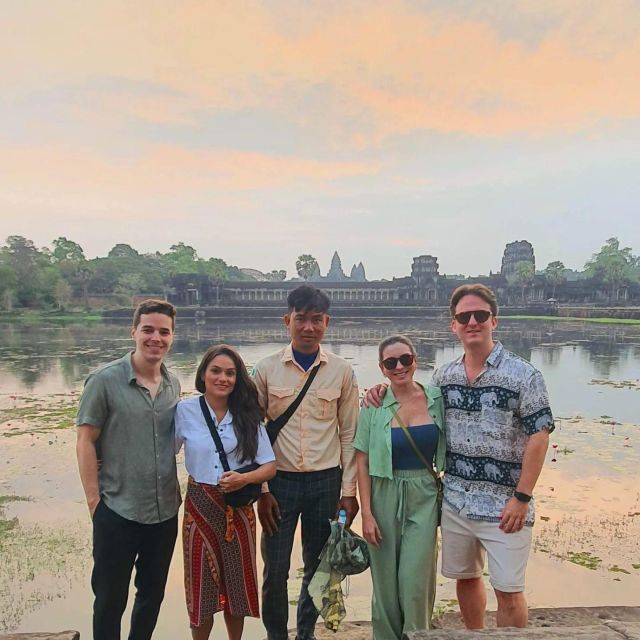
Banteay Srei is the final major stop. Its name is often translated as Citadel of Women, and it is admired for its fine pink sandstone carvings.
Unlike the huge mass of Angkor Wat, Banteay Srei feels smaller and more detailed. Doorways, lintels, and decorative figures are carved with a level of care that rewards close viewing. This is a place where your guide can help you notice details you might otherwise pass without seeing.
Its position at the end of the day is both a strength and a weakness. It gives you a memorable final stop, but you may be tired by the time you arrive. If detailed carvings are important to you, save some energy for this temple rather than spending every last bit of strength earlier in the day.
Lunch is again separate, with a stop at a nearby Cambodian restaurant. The regular second day finishes around 4:00 PM and includes a ride back to your hotel.
Choosing the sunrise option
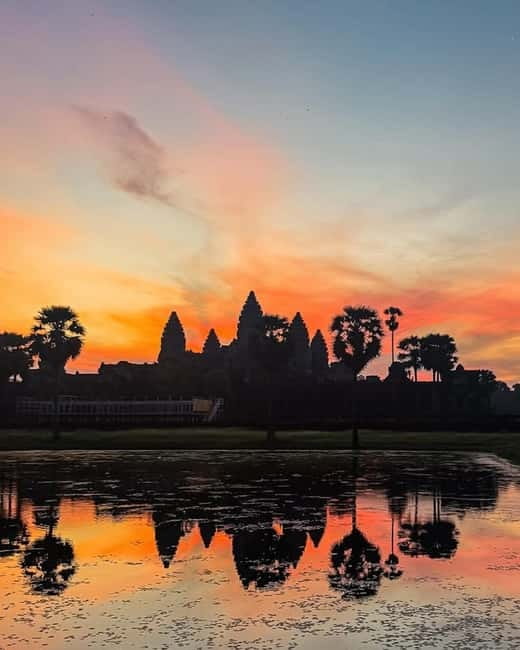
The sunrise option changes Day 2 substantially. You leave at about 5:00 AM and finish around noon, rather than following the regular schedule through the afternoon.
This can suit you if you prefer cooler hours or want the early light at Angkor Wat. One booking included an early sunrise visit over the temple, followed by a full day of temple sightseeing.
The tradeoff is simple: you lose the relaxed afternoon finish and need to be ready in the dark. If you choose this option, arrange your morning carefully and be ready in the hotel lobby before departure. The sunrise choice is selected at checkout, so do not assume it is part of the standard schedule.
Guides, language, and the private format
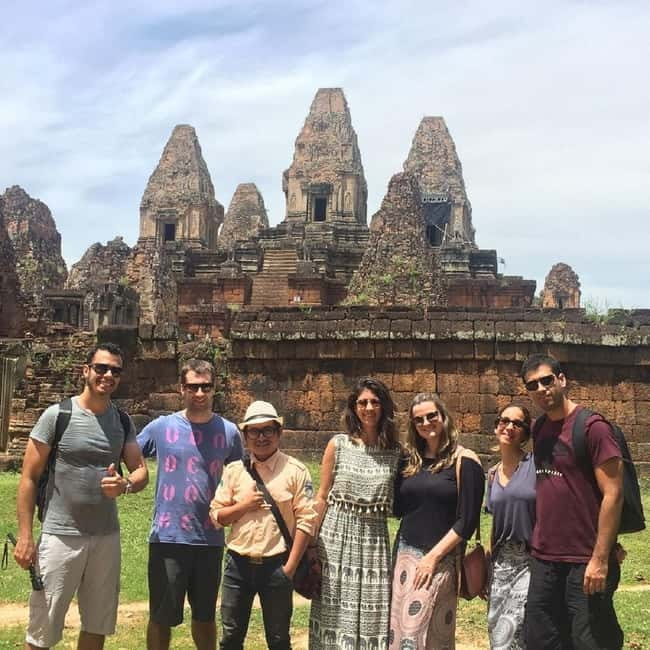
The tour offers guides in English, Spanish, Portuguese, Italian, French, German, and Japanese. That is useful at Angkor, where architectural terms and religious symbols can be difficult to follow in a second language.
The private format is especially helpful for couples and families. You can ask for a slower explanation at Bayon, spend more time at Banteay Srei, or move along when your attention starts to fade. The tour is not designed as a rigid large-group march.
Several guide names appear in the booking information, including Visla, Vincent Bross, Rat, Raf, and Sovuth. Experiences can vary by assignment, but the specific feedback highlights clear explanations, friendly service, good Spanish from Rat, and entertaining interpretation from Sovuth. Sovuth was also noted for taking especially good photographs.
For one or two people, transport is a tuk-tuk on Day 1 and a private car on Day 2. That gives you an open-air ride for the first circuit and more enclosed comfort on the longer second day. Groups of three or more use an air-conditioned van or bus on both days.
What the $245 price really covers
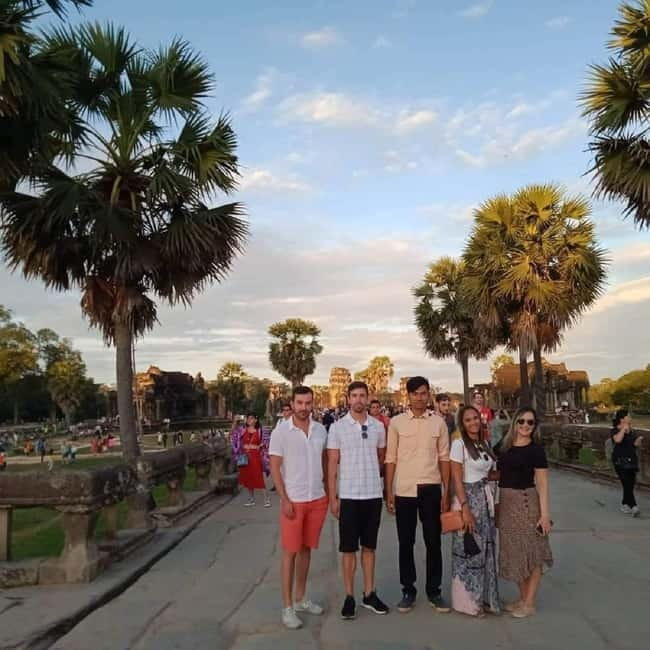
The tour costs $245 for a group of up to two people. Before admission, that works out to $122.50 per person for two people, covering two days of private guiding, hotel transfers, transport, water, and towels.
The Angkor pass is not included. Adults should budget $62 per person for a two or three-day ticket. Children under 12 can join the tour free and do not need an entrance ticket, but you must show a passport as proof of age.
Lunch, drinks not listed as included, and other personal expenses are separate. For two adults, add $124 for temple admission, making the known combined cost $369 before meals and extra drinks.
That is a fair price if you value personal guiding and do not want to arrange transport between widely separated temples. It is less attractive if you only want a driver and plan to read about the monuments on your own. The real value here is the structure, language support, and explanations across two carefully arranged days.
Clothing, comfort, and practical limits
Dress for a religious site, not a beach outing. Short skirts, shorts, sleeveless shirts, and tank tops are not permitted. Wear trousers or a skirt covering the knees and a shirt covering the shoulders. A scarf may help cover your knees and shoulders at many temples, but the stated rules are stricter at most sites, so proper clothing is the safer choice.
Wear comfortable shoes. You will walk on uneven ground, climb steps, and move through temple passages. Bring sunglasses, a hat, a camera, insect repellent, and cash for meals and drinks.
The tour is not suitable for wheelchair users, babies under one year, or people over 95. Children under 12 can join free, but the physical demands of temple steps and long walks still matter when deciding if the schedule fits your family.
Free cancellation is available up to 24 hours before the start for a full refund. You can also reserve and pay later, which helps if your Siem Reap plans are still shifting.
Should you book this Angkor tour?
I would choose this tour if you want to see the essential temples without squeezing Angkor into one exhausting day. It suits couples, families with older children, and small groups who value a private guide, hotel pickup, and the option to use their own language.
The strongest reasons to book are the two-day coverage, the mix of famous and less-frequented temples, and the practical support in hot conditions. The main cautions are the separate $62 admission fee, extra lunch costs, early departure for sunrise, and the amount of walking.
Book it if you want explanations and an organized route. Choose another option if you only want a brief Angkor Wat visit, need wheelchair access, or prefer to control every stop yourself.
FAQ
Is the Angkor entrance ticket included?
No. The Angkor Archaeological Park ticket costs $62 per person for a two or three-day pass. Children under 12 do not need a ticket, but a passport must be shown as proof of age.
What time does the tour start?
The regular pickup time is 8:30 AM from your hotel lobby. If you select the Day 2 sunrise option, that day begins at 5:00 AM and finishes around noon.
What temples are visited on Day 1?
Day 1 includes the South Gate of Angkor Thom, Bayon, the Terrace of the Elephants, the Terrace of the Leper King, Ta Prohm, and Angkor Wat.
What temples are visited on Day 2?
Day 2 includes Preah Khan, Neak Pean, Ta Som, East Mebon, Pre Rup, and Banteay Srei.
Is lunch included?
No. Lunch is not included on either day. You stop at a nearby restaurant for a Cambodian meal, and drinks not specifically included are also extra.
What languages are available for the guide?
Guides are available in English, Spanish, Portuguese, Italian, French, German, and Japanese.
More Temple Tours in Siem Reap
- Angkor Wat Sunrise & 3 Main Temples with Breakfast – Small Group
★ 5.0 · 2,857 reviews - Siem Reap: Full Day Angkor Wat Temple Experience with Sunset
★ 4.9 · 1,490 reviews - 2 Days Exclusive Temple Highlights with Sunset and Sunrise Tour
★ 5.0 · 1,157 reviews - Full-Day Banteay Srei & 4 Temples – Grand Tours Join-in Tour
★ 5.0 · 1,155 reviews
Just added around Siem Reap
- Twilight Tastes of Siem Reap Include Dinner★ 5.0 · 13 reviews
- Ultimate Sunrise to Angkor Wat, Angkor Thom and Bayon Temple★ 5.0 · 3 reviews
- Trekking Tour at Phnom Kulen National Park from Siem Reap★ 5.0 · 3 reviews
- Professional Photo Shoot in Angkor Archaeological Park, Siem Reap★ 5.0 · 42 reviews
- Full-Day Private Tour of Angkor Wat with Pick Up★ 5.0 · 12 reviews
- Unveiling 2 Days Private Angkor Wat/Beyond In Sunrise/Sunset Tour★ 5.0 · 48 reviews
- Siem Reap City Tour with War Museum and Killing Field★ 5.0 · 27 reviews
- Private Day Trip to Angkor Temples with Expert Guide★ 5.0 · 4 reviews
Angkor Wat Tours, compared.
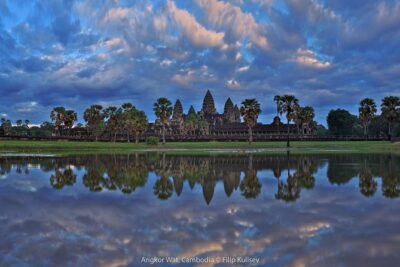
Angkor Wat Sunrise or Sunset Tour with Guide from Siem Reap
Read our review →
Angkor Wat: Small-Group Sunrise or Sunset Tour
Read our review →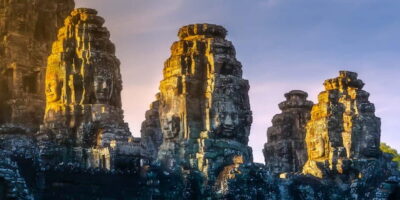
Angkor Wat Highlights and Sunrise Guided Tour from Siem Reap
Read our review →
Angkor Wat Sunrise & 3 Main Temples with Breakfast – Small Group
Read our review →
Angkor Wat Sunrise and Full-Day Sightseeing Tour
Read our review →
Angkor Wat Small-Group Exploration with Expert Guide
Read our review →Browse the lists this tour appears in