
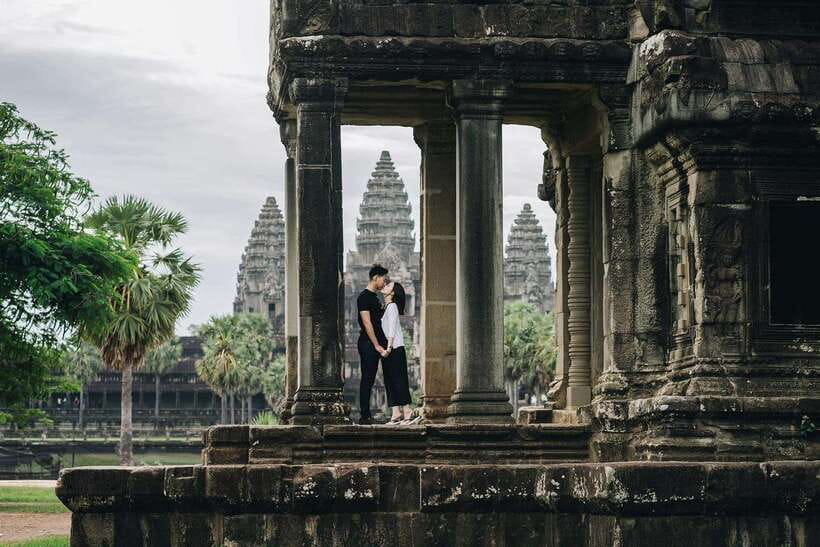
Reviewed · ANGKOR WAT TOURS
Siem Reap: Angkor Wat 2day Big and Small Circuit Guided Tour
Angkor Wat at sunrise is the headline, but the real reward here is the range of temples packed into two days. You see the famous faces of Bayon and the tree-covered stones of Ta Prohm, then move on to quieter sites such as Neak Pean and Banteay Kdei. The mix of famous and lesser-known temples gives you a better sense of Angkor than a single morning visit.
I like the air-conditioned van and hotel pickup, especially after walking in Cambodia’s heat. I also like the guide-led approach, since the carvings and old waterworks make much more sense when someone explains them. The main drawback is pace: this is a full two-day temple circuit, with an early sunrise and plenty of walking, so it is not a good fit for anyone with limited mobility or a dislike of early mornings.
Key points to know before you book
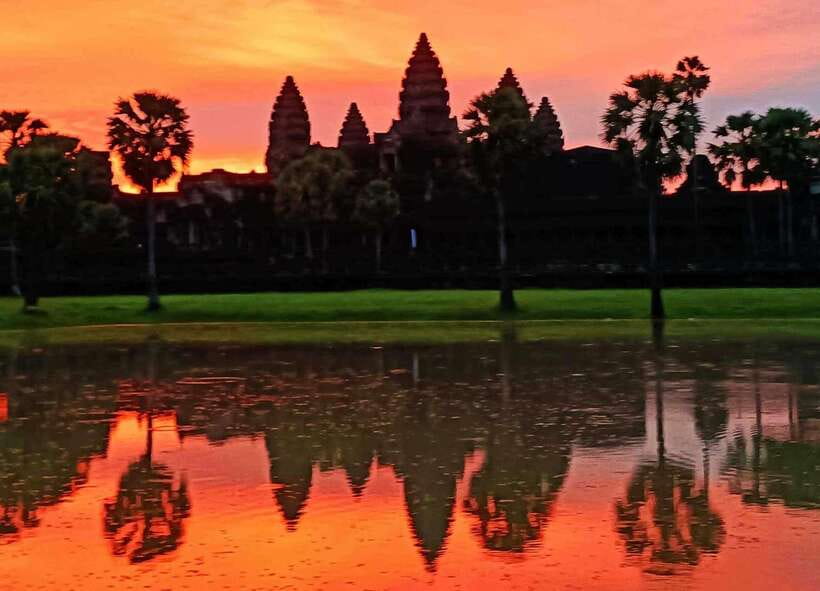
- Sunrise at Angkor Wat: Start early for the famous view, then explore while the morning is still cooler.
- Two distinct temple circuits: Day one covers the sunset and larger loop sites, while day two focuses on Angkor Wat, Angkor Thom, Ta Prohm, and more.
- Strong guide element: English-speaking guides such as Sayon and Sam have been praised for clear explanations of Cambodian history and temple design.
- Air-conditioned transport: Hotel pickup, cool water, and a cool towel make the long days easier.
- Temple ticket is separate: The $39 tour price does not include admission to the Angkor complex or meals.
- Walking is part of the deal: Comfortable shoes, sun protection, and a reasonable level of fitness are important.
Why two days works better than one
Angkor is not one temple. It is a huge archaeological area with major monuments spread across roads, forest, ponds, and old reservoirs. Trying to see only Angkor Wat in a few hours gives you the postcard, but not much of the civilization that made it possible.
This tour divides your time between the small and big circuits. That matters because the temples have different moods and purposes. One may be built around a central pyramid, another around a pond, and another may be almost swallowed by trees. I like this contrast. It keeps the second day from feeling like a repeat of the first.
The $39 price covers two days of guiding and transport, including pickup and drop-off at your hotel. You still pay separately for the temple pass and food, so add those costs before comparing it with other tours. Even so, the price offers solid value if you want transport, a guide, and a planned route rather than arranging every stop yourself.
Private and small-group options are available. A small group can keep the cost down, while a private booking may give you more control over pauses and walking speed. The exact group size is not specified, so check the option shown when you book.
More ways to walk into Angkor Wat:
- Angkor Wat Sunrise or Sunset Tour with Guide from Siem Reap
★ 5.0 · 12,109 reviews - Siem Reap: Angkor Wat: Small-Group Sunrise or Sunset Tour
★ 5.0 · 9,444 reviews - Siem Reap: Angkor Wat 2-Day Tour with Sunrise and Sunset
★ 4.9 · 4,429 reviews
Day one: sunset and the outer temple circuit
The first day begins around sunset and takes you through several temples beyond the best-known Angkor Wat scene. The route includes Phnom Bakheng, Pre Rup, East Mebon, Ta Som, Neak Pean, and Preah Khan. You get a broad look at Khmer temple planning, from hilltop towers to buildings surrounded by water.
Phnom Bakheng sits on a hill and is linked with a striking symbolic idea: its 33 towers represent the heavens. The climb adds effort at the end of the day, but it also gives this stop a different feel from the flat temple sites. Ask your guide about the temple’s role and meaning rather than treating it as only a sunset viewpoint.
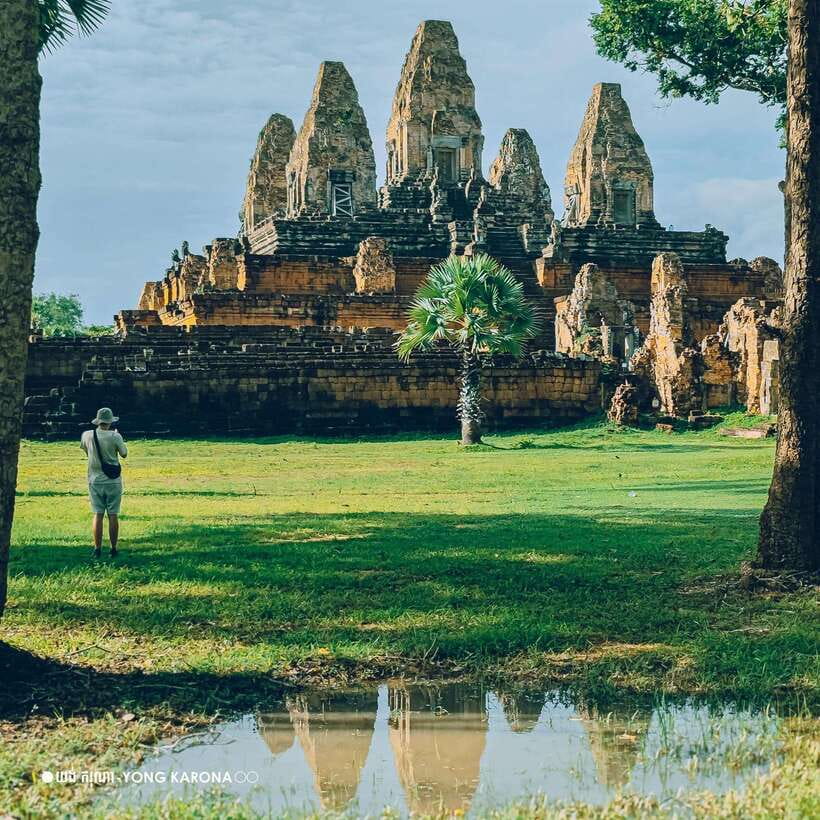
Pre Rup is another high, stepped temple. It was built by a king for himself and is often wrongly described as a crematorium because of a stone structure that resembles a coffin. The supplied information gives a more specific explanation: Hindus used this structure for meditation at the full moon. That detail is a good example of why a guide helps. The stones alone cannot explain how people used the site.
East Mebon dates from the 10th century and was built for ancestors. It once rose from the middle of a reservoir, although the water is no longer the defining feature it was in the Angkor period. I find this kind of stop useful because it shows that Angkor was not simply a collection of stone buildings. Water, kingship, family memory, and religion were tied together.
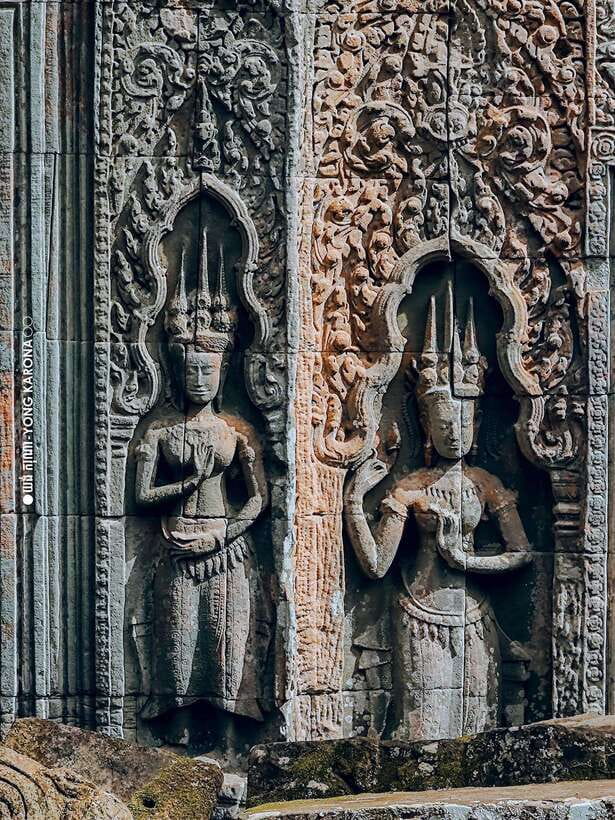
Ta Som has one of the most memorable scenes on the route: a large tree growing over its eastern gate. The temple was built for the king’s sister and includes many carved dancers with long hair. It is smaller than the headline monuments, but that can be an advantage. You can focus on the carvings and the way nature has pressed into the architecture.
Neak Pean is built on an island and surrounded by water. In the Angkor period, the water around it was used for bathing and health. The approach gives you a different view of Khmer engineering and ritual design, with water shaping the whole stop.
Preah Khan is the largest temple on this loop. It was built by King Bayon for his father and rewards slow walking through its long passages and carved details. This is one of the places where the two-day plan earns its keep. You are not limited to the most famous names, and the guide can connect the monument to the king, his family, and the wider Khmer world.
The sunset timing is appealing, but light and access can vary at any temple site. Treat sunset as an important part of the plan, not a guaranteed perfect sky. You will also want to remember that day one is not a light introduction. The walking begins before you have fully settled into the rhythm of the tour.
Day two: Angkor Wat before the heat
Day two begins early for sunrise at Angkor Wat. This means leaving your hotel before most normal sightseeing schedules begin, so prepare your clothes and camera the night before. You will need comfortable shoes, a hat, sunscreen, water, and a passport or copy of an ID card.
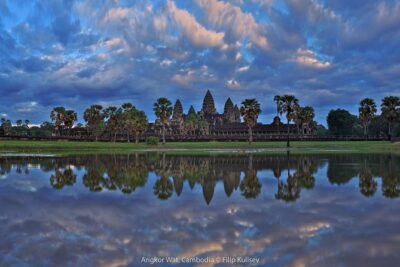
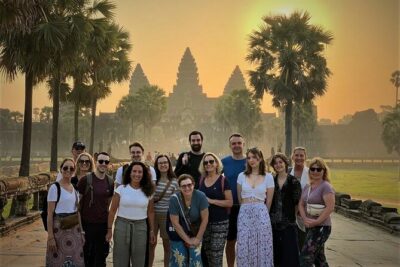
Sunrise is worth the early alarm because it changes the way the temple feels. The towers become a dark outline, then slowly pick up color as the sky brightens. The sight can be busy, but the cooler air helps. Afterward, you can explore the temple itself before the strongest heat of the day.
Angkor Wat is Cambodia’s most famous monument and the center of this second day. It is also the place where a guide’s explanation can make a big difference. The scale is easy to see, but the religious purpose, carved stories, and design of the galleries are harder to understand without context.
The plan includes breaks for rest, cool water, and a cool towel. Those are small comforts, but they matter after several hours of stone paths and exposed courtyards. Food is not included, so carry enough water and budget for your own meals.
Angkor Thom and the smiling faces of Bayon
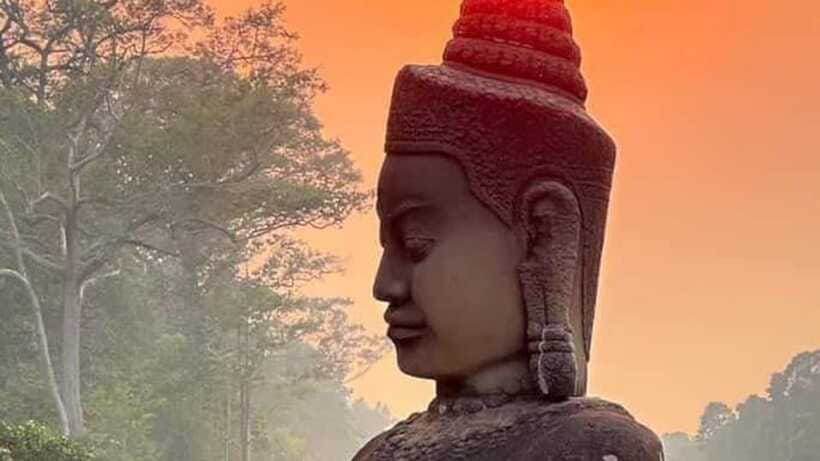
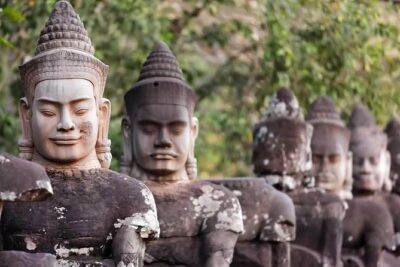
The South Gate of Angkor Thom provides a dramatic entrance. A bridge lined with statues of gods leads toward the gate, giving you a strong visual introduction before you reach the central temple area.
This is one of the stops where the approach is almost as interesting as the building. Look at the repeated figures along the bridge and ask your guide how the gods fit into Khmer religious ideas. The gate also gives you a sense of the planned scale of Angkor Thom, an enclosed royal center rather than a single isolated shrine.
Inside, Bayon is known for its large smiling faces. The towers can feel confusing at first because the faces appear from different angles and levels. I recommend slowing down here instead of rushing to take a quick photograph. The guide can help you see how the carvings and towers work together.
Bayon is also a good reminder that Angkor changed over time. The temples were built, altered, and used by different kings and religious traditions. A clear English-speaking guide can give you the basic timeline without turning the visit into a lecture. Sayon and Sam are two guides associated with this experience who have been praised for their explanations, positive spirit, and clear interest in Cambodian history. Your assigned guide may be different, but the tour is designed around live English guidance.
A few more Siem Reap half-days worth weighing up
- Angkor 2-Day Sunset & Sunrise Small-Group Tour
★ 5.0 · 2,567 reviews - 2 Days Exclusive Temple Highlights with Sunset and Sunrise Tour
★ 5.0 · 1,157 reviews - Siem Reap: Angkor Sunrise 1- or 2-Day Guided Temples Tour
★ 4.9 · 1,132 reviews - 2 Days Guided Historical Tour in Angkor
★ 5.0 · 855 reviews
Ta Prohm, where trees meet the temple
Ta Prohm is the most instantly recognizable stop after Angkor Wat. It became famous outside Cambodia through the film Tomb Raider, but the temple deserves attention beyond its movie connection.
The main appeal is the collision between stone and tree roots. Walls, doorways, and galleries appear partly held by or pressed apart by vegetation. You can see why the site became such a powerful symbol of Angkor, but you should also look at the carvings and layout rather than treating it as a film set.
Ta Prohm can be crowded, and some routes through the temple may feel slow. That is the tradeoff for seeing one of the complex’s most popular monuments. A guide can help you focus on specific features instead of spending the whole stop waiting for a clear photograph.
Banteay Kdei and Ta Keo add contrast
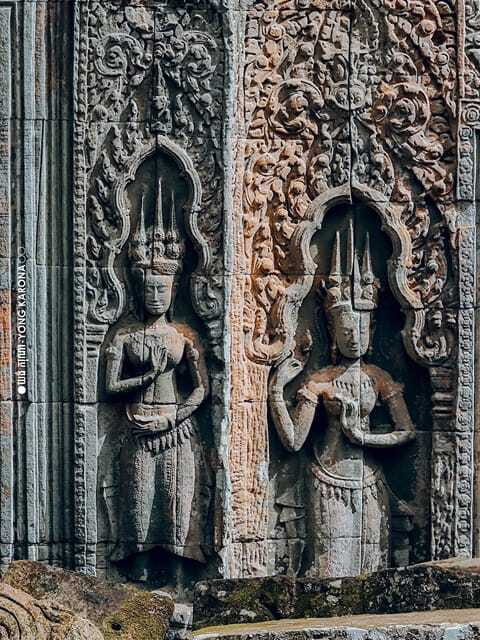
Banteay Kdei is a Buddhist temple that is largely unrestored and still used by monks. It has a rougher, less polished feel than the most carefully presented monuments. For me, that makes it valuable. You get a closer look at a temple that remains part of a living religious setting, rather than only an archaeological display.
The partly unrestored condition also means you should watch your footing and expect uneven walking. This is not a quick, smooth museum visit. The site asks you to pay attention to the stones, doorways, and signs of age.
Ta Keo is a mountain temple built in the 10th century. You walk upward between ancient stonework and the modern world around it. The climb gives the stop a physical edge, so do not treat it as an easy stroll. Comfortable shoes matter here, and anyone with mobility problems should take the tour’s restriction seriously.
Together, Banteay Kdei and Ta Keo show why the route is more than a list of famous photo stops. One gives you a Buddhist temple still connected with monks; the other presents a steep, pyramid-like form built to suggest a sacred mountain.
Guides, transport, and the daily rhythm
The tour uses an air-conditioned van and includes pickup and drop-off at your hotel in Siem Reap. That removes the need to arrange transport between widely separated temples, which is one of the main practical benefits of booking a guided circuit.
The van also gives you a place to cool down between stops. Angkor sightseeing can involve heat, dust, bright sun, and repeated walking on stone. The included water and wipe towel are useful, though you should still carry your own water and sun protection.
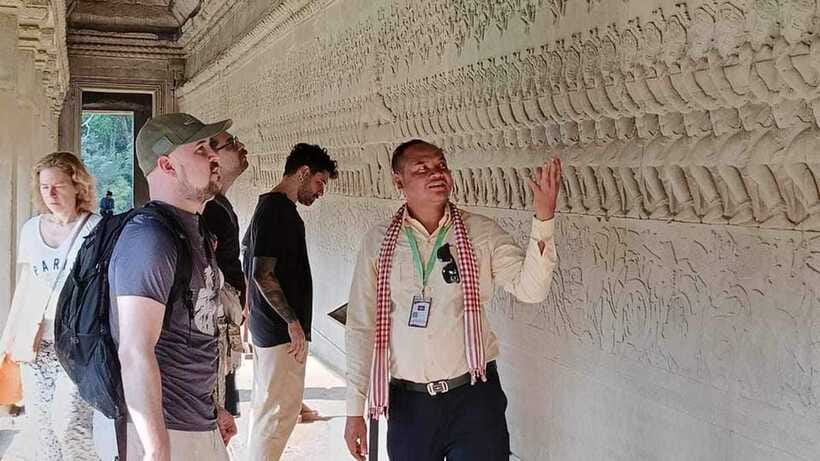
The guide is the part of the tour that can change the quality of the visit. Names connected with this experience include Sayon and Sam, both praised for explaining the temples, the city, Cambodia, and the setting around each monument. I would listen for more than dates. The best use of your guide is to ask why a temple was built, how water shaped the site, and how Hindu and Buddhist ideas appear in the carvings.
The schedule is full, so tell your guide if you need a short rest. The tour includes breaks, but this is still not a flexible, slow-paced photography trip unless you choose a private option and arrange that in advance.
What to pack and what to leave behind
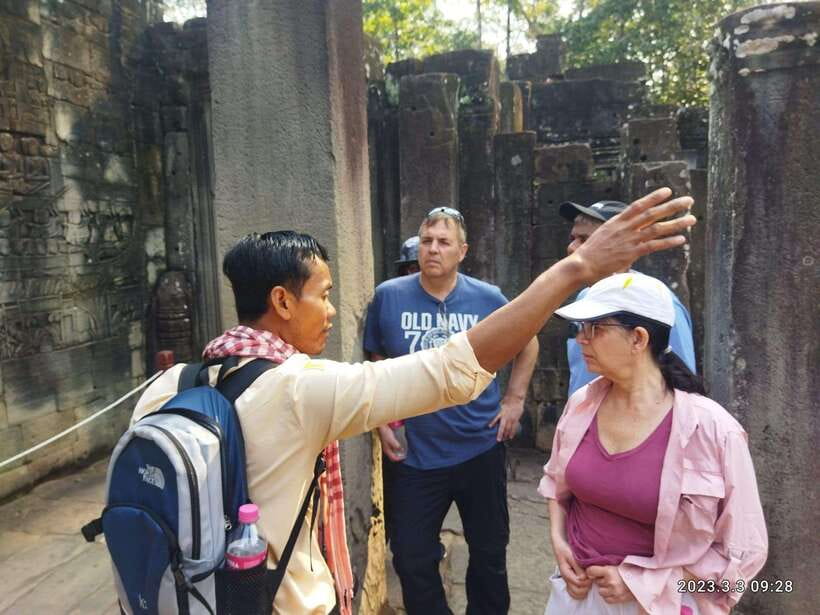
Wear shoes that can handle uneven ground and a fair amount of walking. A hat, sunscreen, water, and a camera belong in your day bag.
Bring a passport or ID card, with a copy accepted according to the tour information. You need an Angkor temple pass, which is not included in the tour price. The pass can be bought online through Angkor Enterprise at www.angkorenterprise.gov.kh or at the ticket office.
Flash photography is not allowed, and littering is prohibited. More important, treat the temples as active cultural and religious places, not just backdrops. Keep your voice and behavior respectful, and take care around carvings and old stone.
Children under 12 are not considered suitable for this tour. It is also not suitable for wheelchair users or people with mobility impairments. Those restrictions make sense given the early start, hill climbs, uneven temple surfaces, and long walking days.
Is the $39 price good value?
At $39 per person, the tour is priced for people who want a guided, organized introduction to Angkor without paying for a high-end private service. You receive two days of transport, a live English-speaking guide, hotel pickup and drop-off, sunset and sunrise visits, water, and rest breaks.
The price does not include the temple pass or food. That is the main cost detail to watch. Add both before you set your total budget, especially if you are comparing this with a package that includes admission.
I think the value is strongest for first-time visitors who want the major sights but also want Preah Khan, Neak Pean, Ta Som, East Mebon, Pre Rup, Banteay Kdei, and Ta Keo. If you already know Angkor well and want to linger at just two or three temples, the fixed schedule may feel too packed.
The free cancellation policy allows cancellation up to 24 hours in advance for a full refund, and you can reserve now and pay later. Those terms are useful if your Siem Reap plans are still shifting.
Should you book this Angkor tour?
Book it if you want a strong first look at Angkor, prefer having transport and explanations arranged, and can handle an early morning plus two active days. The combination of sunrise at Angkor Wat, sunset viewing, Bayon, Ta Prohm, and quieter temples gives you a fuller picture than a short Angkor Wat visit.
Choose a private option if you want more control over breaks or photography time. Skip it if you have mobility limits, are traveling with children under 12, or want a relaxed schedule with no early start.
For most fit adults visiting Siem Reap for the first time, I would consider this a useful and fairly priced way to meet Angkor. Just buy the temple pass separately, bring sun protection, and save some energy for the pyramid climbs.
FAQ
Does the tour include the Angkor temple entrance fee?
No. Temple entrance fees are separate and must be purchased online or at the ticket office.
Is food included?
No. Food is not included, so you should budget separately for meals and carry water.
Is hotel pickup included?
Yes. Pickup and drop-off at your hotel in Siem Reap are included, with pickup at the time booked for the tour.
Is the tour private or shared?
Private and small-group options are available. The exact group size depends on the option you select.
What language does the guide speak?
The live guide speaks English.
Is this tour suitable for wheelchair users or children under 12?
No. The tour is not suitable for wheelchair users, people with mobility impairments, or children under 12.
Just added around Siem Reap
- Twilight Tastes of Siem Reap Include Dinner★ 5.0 · 13 reviews
- Ultimate Sunrise to Angkor Wat, Angkor Thom and Bayon Temple★ 5.0 · 3 reviews
- Trekking Tour at Phnom Kulen National Park from Siem Reap★ 5.0 · 3 reviews
- Professional Photo Shoot in Angkor Archaeological Park, Siem Reap★ 5.0 · 42 reviews
- Full-Day Private Tour of Angkor Wat with Pick Up★ 5.0 · 12 reviews
- Unveiling 2 Days Private Angkor Wat/Beyond In Sunrise/Sunset Tour★ 5.0 · 48 reviews
- Siem Reap City Tour with War Museum and Killing Field★ 5.0 · 27 reviews
- Private Day Trip to Angkor Temples with Expert Guide★ 5.0 · 4 reviews
Angkor Wat Tours, compared.
Angkor Wat Sunrise or Sunset Tour with Guide from Siem Reap
Read our review →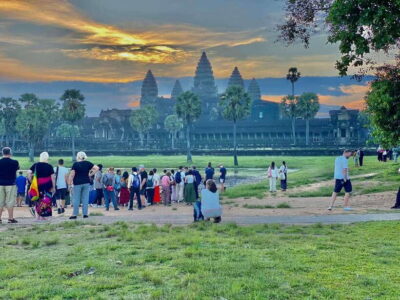
Angkor Wat: Small-Group Sunrise or Sunset Tour
Read our review →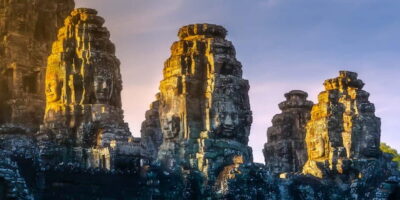
Angkor Wat Highlights and Sunrise Guided Tour from Siem Reap
Read our review →
Angkor Wat Sunrise & 3 Main Temples with Breakfast – Small Group
Read our review →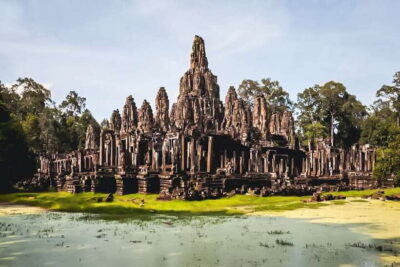
Angkor Wat Sunrise and Full-Day Sightseeing Tour
Read our review →
Angkor Wat Small-Group Exploration with Expert Guide
Read our review →Browse the lists this tour appears in