
Reviewed · ANGKOR WAT TOURS
Siem Reap Angkor Wat Sunrise Explore The Most Iconic Temples
Angkor Wat at sunrise is the star here, but this tour gives you more than the usual postcard stop. You enter through the quieter western approach, watch the towers catch the first light, then continue to Ta Prohm and Bayon before the day becomes too hot. The low price makes this an easy way to see several major temples in one morning.
I like the mix of famous and quieter sites, especially Banteay Kdei, where broken corridors and soft morning light offer a calmer pause. I also like that guides such as Noun have been praised for clear explanations and good photo spots. The main caution is group size: one booking reported more than 40 people and two buses, which can make questions and head counts slow.
Key points at a glance
- Sunrise begins around 4:20 to 5:15 pickup: You need to be ready early, but you reach Angkor Wat before the main heat.
- Five distinct temple stops: Angkor Wat, Banteay Kdei, Ta Prohm, Bayon, and Tonle Om Gate each offer a different view of the park.
- Noun is a named guide to look for: He has been singled out for helpful explanations and photo suggestions.
- The $13 price covers the basics: Transport, an English-speaking guide, drinking water, pickup, and drop-off are included.
- Temple admission is extra: You must buy your own Angkor Archaeological Park ticket, and food is not included.
- Large groups are possible: The value is strong, but the tour may feel less personal when two buses are combined.
Why this $13 sunrise tour makes sense
For $13 per person, this is a budget sightseeing day rather than a private temple visit. Your fee pays for an air-conditioned bus, hotel pickup and drop-off in Siem Reap City, drinking water, and an English-speaking guide. You still pay for your temple ticket and meals, so include those costs before comparing it with a private car.
The value comes from the route. A tuk-tuk or car arranged on your own may give you more control, but this tour removes the need to plan the order of the temples, find the entrances, and arrange transport before dawn. For a first visit, that convenience matters.
The tradeoff is personal attention. A small group can stop when you want, linger over carvings, and ask plenty of questions. This tour can carry a large group, and one booking described more than 40 people spread over two buses. If the group is that size on your date, you should expect a practical overview rather than a quiet, detailed conversation at every shrine.
More ways to walk into Angkor Wat:
- Angkor Wat Sunrise or Sunset Tour with Guide from Siem Reap
★ 5.0 · 12,109 reviews - Siem Reap: Angkor Wat: Small-Group Sunrise or Sunset Tour
★ 5.0 · 9,444 reviews - Siem Reap: Angkor Wat 2-Day Tour with Sunrise and Sunset
★ 4.9 · 4,429 reviews
The pre-dawn pickup and ride to Angkor
Pickup takes place from hotels in Siem Reap City between about 4:20 and 5:15 in the morning. The exact time depends on your hotel and the day’s arrangements, so keep your phone available and be ready before the stated window.
The early start is not a small detail. You will spend roughly eight hours on the full outing, with the return expected between noon and 1:00 p.m. That schedule lets you see the temples in cooler morning air, but you will need to manage a very early alarm and a long first stretch of walking.
Transport is by air-conditioned bus or minibus. The stated itinerary lists about an hour by coach at the start and around 30 minutes on the return. That makes the included vehicle useful, particularly when you are leaving town before sunrise and returning after several temple walks.
Bring water, comfortable shoes, and something light to cover your shoulders and knees. Drinking water is supplied, but meals are not, so ask about food arrangements when you board or carry something suitable if allowed by your booking arrangements. The supplied details do not promise a breakfast stop.
Watching the sky change over Angkor Wat
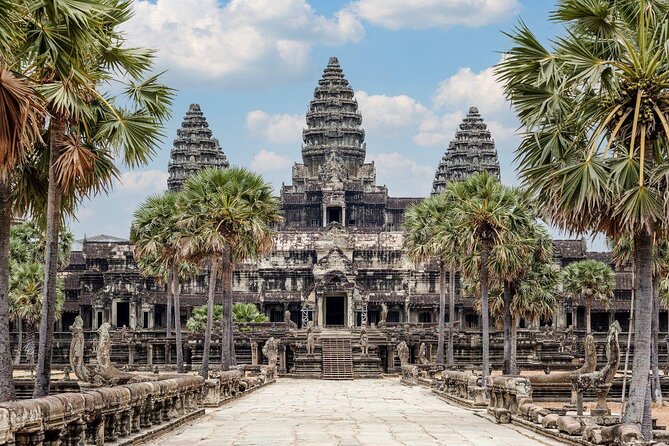
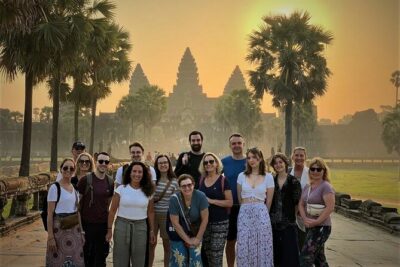
The first major stop is Angkor Wat, the world’s largest religious monument. You arrive for sunrise and watch the temple towers reflect in the moat. The scene is famous for good reason, though the best-known view can attract a crowd even in the early morning.
The western entrance used here is described as little visited, which gives the approach a useful change of pace. You are not simply dropped at a standard photo point. Instead, you begin by seeing the monument from outside, with the dark silhouette of the towers gradually picking up color.
Give yourself a moment before reaching for your camera. The moat, long galleries, and central towers make the view easy to photograph, but the scale is better understood in person. The main benefit of arriving early is not only the sunrise. It is also the chance to begin exploring before the strongest midday sun.
Sunrise times vary by season, and the tour description does not provide a fixed start time beyond the early pickup window. Check availability for the precise departure when booking. You should also understand that the sunrise view depends on weather and cloud cover, something no tour can control.
Inside Angkor Wat, from bas-reliefs to the central sanctuary
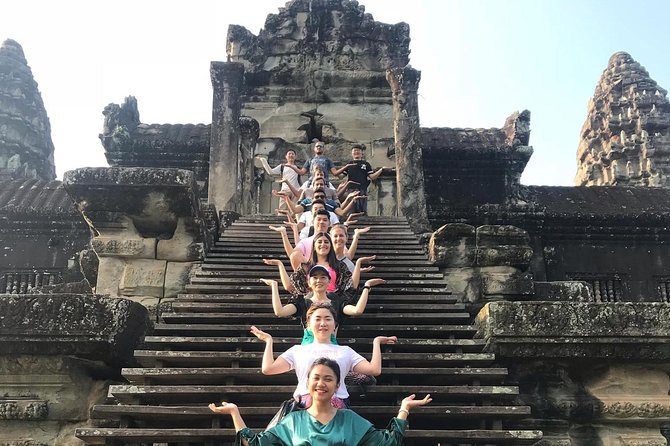
After sunrise, the guide takes you inside for about two hours. Angkor Wat began as a Hindu temple dedicated to Vishnu and later became a Buddhist site. That change is visible in the way the monument serves both as a grand architectural statement and as a place of worship.
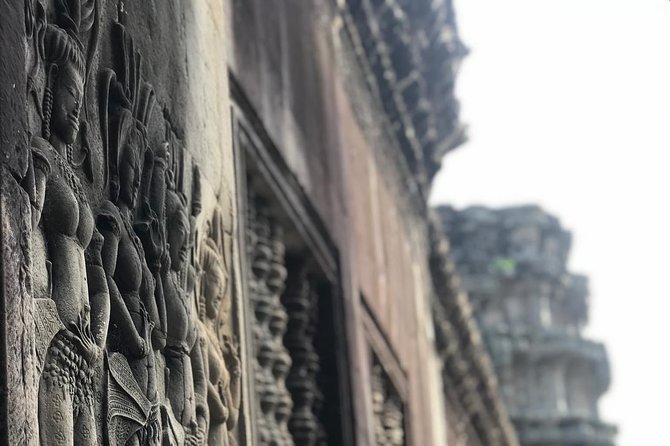
The bas-reliefs are one of the major reasons to spend time beyond the first exterior view. They show scenes from Hindu mythology along the galleries, with long stretches of carved stone that reward patience. Your guide can help explain what you are seeing, which is useful because the scenes are not always easy to read at a glance.
The galleries also show how carefully the temple was planned. You move from broad outer spaces toward more sacred inner areas, ending near the central sanctuary. The itinerary allows two hours here, enough for a useful first look, though not enough to inspect every carving in detail.
This is where guide quality matters most. A guide such as Noun can point out better photo positions and explain why the temple changed from Hindu to Buddhist use. One positive assessment specifically praised his temple knowledge and help with photographs. If your group is large, stay close to the guide and listen carefully when the group gathers, since information may be repeated only once.
More early starts around Siem Reap:
- Angkor Wat Sunrise tour with Small – Group and Guide tours
★ 5.0 · 3,655 reviews - Angkor Wat Highlights and Sunrise Guided Tour from Siem Reap
★ 5.0 · 3,213 reviews - Full-Day Angkor Wat Sunrise Private Tour with Guide from Siem Reap
★ 5.0 · 2,920 reviews - Angkor Wat Sunrise & 3 Main Temples with Breakfast – Small Group
★ 5.0 · 2,857 reviews
Banteay Kdei gives the morning some breathing room
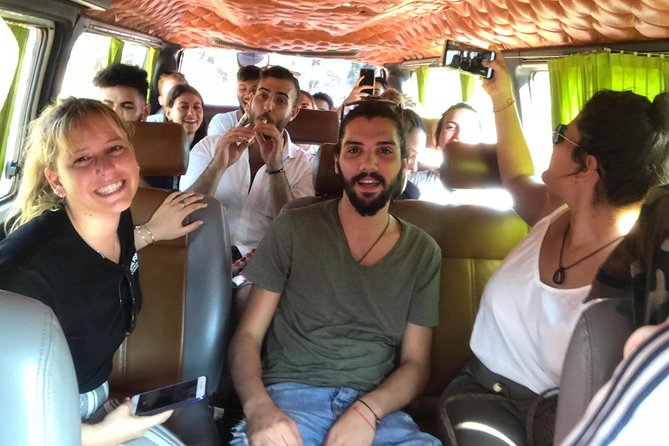
Banteay Kdei follows Angkor Wat, with about an hour for a guided visit and walk. Its name means Citadel of Chambers, and the temple was built in the late 12th century as a Buddhist monastery.
This stop is useful because it changes the mood. Angkor Wat is monumental and formal. Banteay Kdei is quieter and partly ruined, with corridors, chambers, and carvings that feel less polished. You can pay attention to the structure rather than trying to capture the one famous view everyone knows.
The worn sections are part of its appeal, but they also mean uneven walking and less obvious routes. You may find yourself moving through broken passages and open areas rather than following a neat sequence. Keep your footing and stay with the group, especially if the guide is managing a large party.
I would not skip Banteay Kdei simply because it is less famous. It helps you see that Angkor is not one monument with a few side stops. The park contains temples with different designs, states of preservation, and religious purposes.
Ta Prohm and the trees that took over the stone
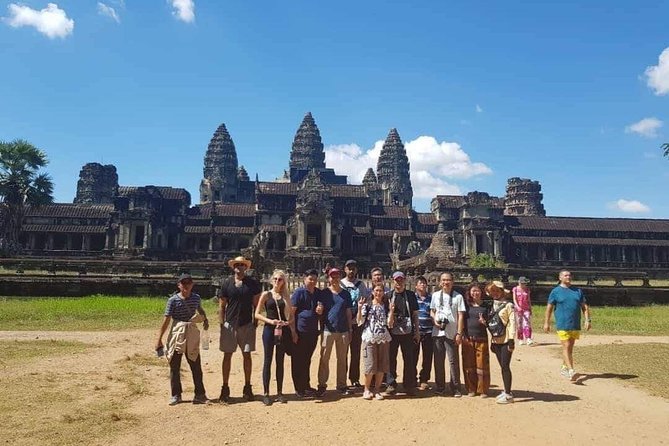
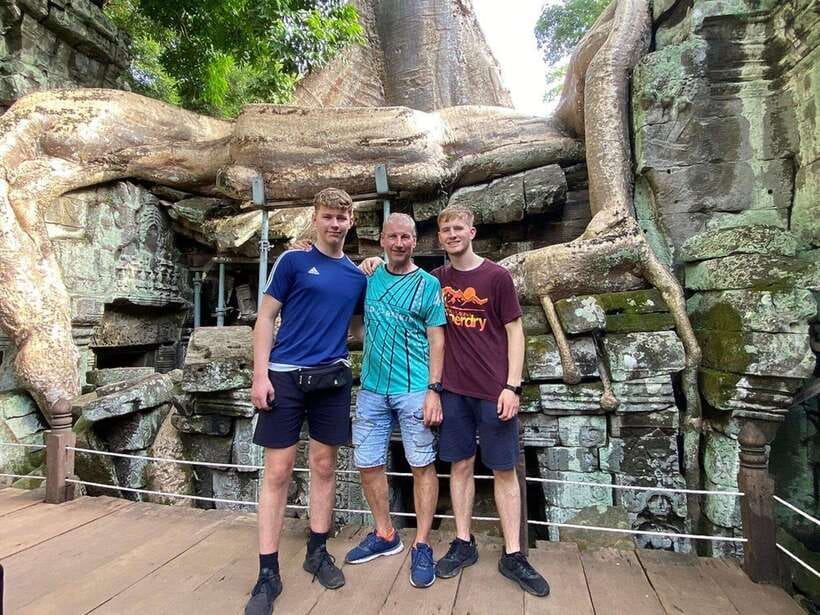
Ta Prohm receives about an hour and a half. This is the temple most associated with giant tree roots gripping walls and growing across ruined chambers. It was left largely unrestored, creating the jungle-temple effect that made it famous in Tomb Raider.
The attraction is immediate. Stone doorways, collapsed galleries, and enormous roots create photographs that look unlike the ordered terraces of Angkor Wat. But the setting is more than a film backdrop. Ta Prohm shows what happens when a temple is encountered as a ruin rather than presented as a fully repaired monument.
You should expect narrow passages and plenty of stops for photographs. The same roots that make the site special can make movement slower, particularly when several groups reach the same dramatic doorway. A guide can help you find strong angles, but you may need patience if your bus is not the only one at the temple.
The 90-minute allocation is sensible for a first visit. It gives you time to see the central areas without turning the stop into a rushed photo call. If you want to study every carved detail, though, the schedule will feel tight.
Bayon’s stone faces and everyday scenes
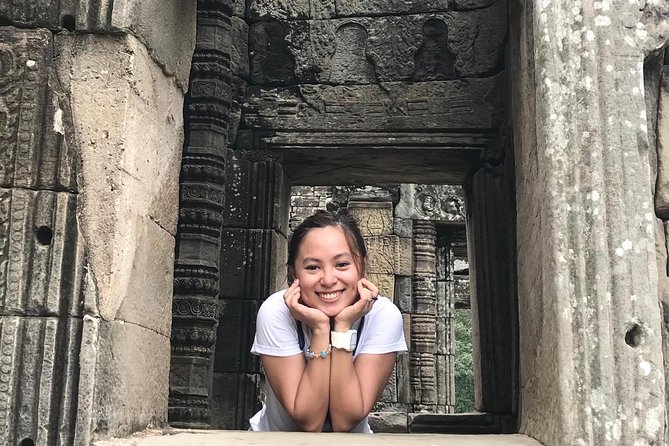
Bayon is in the center of Angkor Thom and receives about an hour and a half. Its 54 towers are decorated with four large serene faces, creating more than 200 carved faces in all. From a distance the temple looks compact and confusing. Inside, the towers appear from different angles as you pass through the galleries.
The faces are the obvious draw, but the daily-life carvings make Bayon especially rewarding. The reliefs also show historical battles, so you can compare ordinary scenes with formal accounts of power and conflict. Look closely at the lower galleries rather than focusing only on the famous faces above.
Bayon is a place where a guide’s explanation can save time. The structure has multiple levels and tight passages, and a group may pause often as people take pictures. Keep the guide in sight and note the meeting point before wandering toward another face-covered tower.
The stop comes after Angkor Wat, Banteay Kdei, and Ta Prohm, so fatigue may begin to matter. You will have been walking since early morning. The 90-minute visit is generous, but comfortable shoes and regular drinks will make a real difference.
Tonle Om Gate and the road out of Angkor Thom
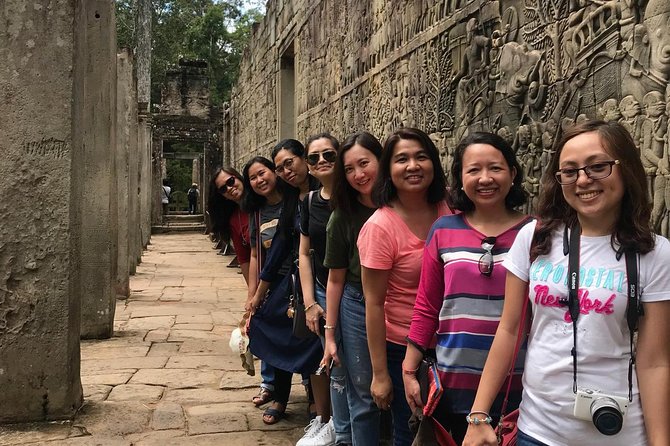
The final site is Tonle Om Gate, also called the South Gate of Angkor Thom. The stop lasts about 30 minutes and works well as a final short walk before the return journey.
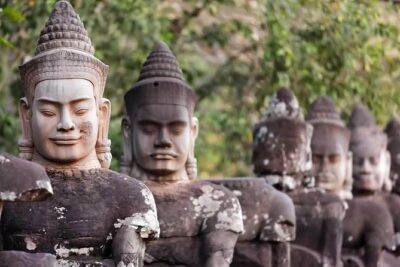
A causeway leads toward the gate, lined with statues of gods and demons. Above the entrance are four large stone faces similar to those at Bayon. This gives you one last chance to see how Angkor’s religious ideas were expressed through monumental roads, guardians, and faces carved into towers.
The gate is especially good for photographs because the approach creates a clear line toward the entrance. It is not as large a visit as Angkor Wat or Ta Prohm, and the half-hour timing reflects that. Think of it as a closing scene, not another full temple exploration.
From here, you return to Siem Reap by bus. The ride is listed as about 30 minutes, though the full timing can depend on hotel drop-offs and the number of passengers. The tour generally ends between noon and 1:00 p.m.
What the guide and group size mean in practice
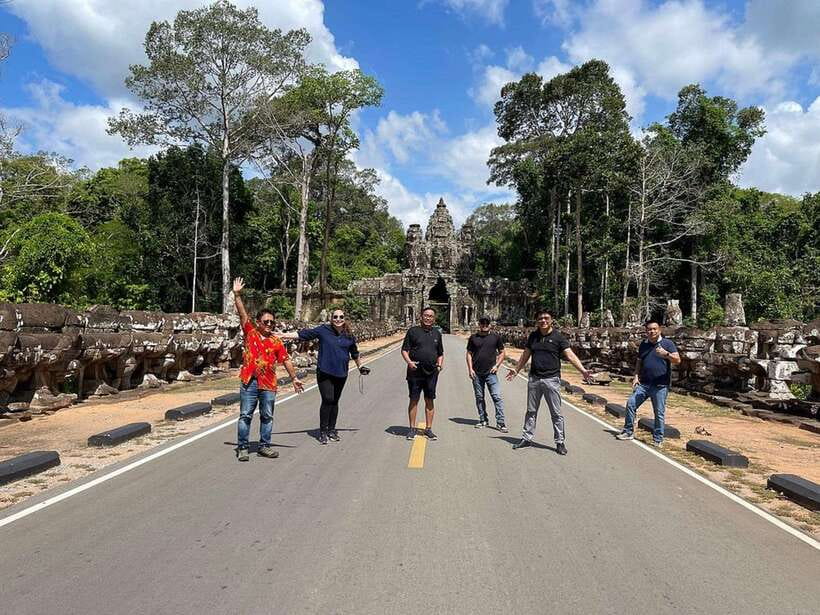
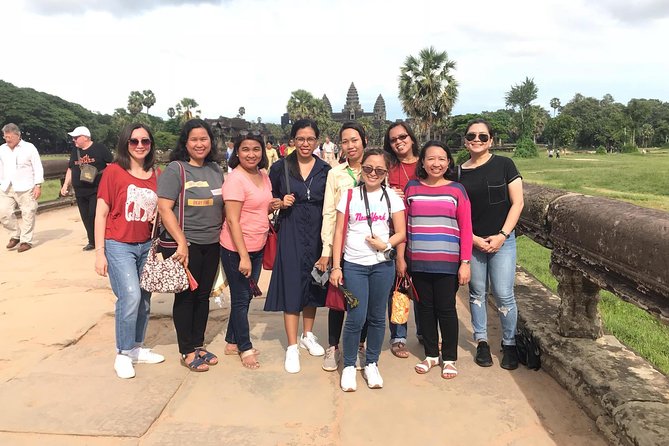
The tour is in English, and an English-speaking guide is included. Noun is the named guide associated with several positive comments, with particular praise for his explanations and suggestions for good photographs. Another assessment described the guide as good and the pickup and hotel return as punctual.
That is the best version of this tour: an organized route, a guide who can explain the monuments, and a driver who keeps the morning moving. You get context instead of simply being delivered to a series of gates.
The less certain part is group size. One booking reported two buses and more than 40 people, with one guide trying to answer questions, keep everyone together, and check that nobody was left behind. The concern was aimed at the organization, not the friendliness of the guide and driver.
So, set your expectations clearly. You are buying access to a low-cost group route, not a private lecture. If you prefer to ask many questions or take your time at one carving, a smaller tour may suit you better. If you mainly want transport, a guide, and the main temples in one day, this arrangement can be good value.
Timing, tickets, clothing, and what to bring
The Angkor Archaeological Park entrance ticket is not included. You purchase it at your own expense, so check the current ticket arrangements before departure and budget for that separate cost. The tour price alone does not cover admission to Angkor Wat or the other temples.
Meals are also excluded. The supplied schedule does not list a meal stop, so plan for the fact that you may be sightseeing through the morning without a provided breakfast. Water is included.
Wear practical clothing for a long morning outdoors. You should expect repeated walking at Angkor Wat, Banteay Kdei, Ta Prohm, and Bayon, with an additional walk at Tonle Om Gate. Clothing suitable for temple visits is the sensible choice, especially for the more sacred interior areas.
A camera is useful, but do not let it turn every stop into a search for the same photograph. The guide can show you good angles, yet the most memorable parts often come from slowing down at a gallery, a ruined chamber, or a carved face that is not the obvious one.
Who should book this Angkor morning?
I would recommend this tour to a first-time visitor who wants the major names in one organized day and cares about keeping the base price low. It also suits solo bookers who would rather not arrange pre-dawn transport alone, and anyone who likes having an English-speaking guide explain the monuments.
It is less suitable for someone seeking a private, quiet temple day. Large groups are possible, and the early start followed by several walks can feel tiring. It also may not suit you if you want a flexible schedule with long pauses at one temple.
The route itself is well judged. Angkor Wat provides the sunrise and major galleries. Banteay Kdei offers a quieter ruin. Ta Prohm supplies the tree roots and film connection. Bayon brings the stone faces and carved scenes, while Tonle Om Gate closes the circuit with a dramatic entrance.
Should you book it?
Book this tour if you want maximum coverage for a low base price and are comfortable paying separately for the temple ticket and food. The early pickup, air-conditioned transport, water, and hotel return remove much of the practical work.
Before booking, decide how much group size matters to you. The 4.8 rating reflects strong approval overall, including praise for Noun, the temple explanations, photo help, and reliable pickup. But the report of more than 40 people is an important warning for anyone who values personal attention.
For most first-time visitors on a budget, I think the route is worth considering. Go in expecting a busy group outing, stay close to the guide, and treat the $13 price as transport and orientation rather than a private cultural tour.
FAQ
How much does the tour cost?
The tour costs $13 per person. The Angkor temple ticket and meals are not included.
How long does the experience last?
The full experience lasts about eight hours. Pickup is scheduled between 4:20 a.m. and 5:15 a.m., with return to Siem Reap expected between noon and 1:00 p.m.
Where does pickup take place?
Pickup is included from hotels in Siem Reap City, listed as Krong Siem Reap.
Is transportation included?
Yes. Transport is provided by air-conditioned bus or minibus, with pickup and drop-off included.
Is an English-speaking guide included?
Yes. The tour includes a live English-speaking guide. Noun is one guide associated with this route.
Which temples are visited?
The route includes Angkor Wat, Banteay Kdei, Ta Prohm, Bayon Temple, and Tonle Om Gate, also called the South Gate of Angkor Thom.
Is sunrise at Angkor Wat included?
Yes. The tour begins with a sunrise visit at Angkor Wat, followed by time inside the temple.
Do I need to buy a temple ticket separately?
Yes. The temple entrance ticket is not included and must be purchased at your own expense.
Is food included?
No. Meals are not included. Drinking water is provided.
Can I cancel the booking?
Yes. You can cancel up to 24 hours in advance for a full refund. The activity also offers a reserve-now-and-pay-later option.
More Temple Tours in Siem Reap
- Siem Reap: Full Day Angkor Wat Temple Experience with Sunset
★ 4.9 · 1,490 reviews - 2 Days Exclusive Temple Highlights with Sunset and Sunrise Tour
★ 5.0 · 1,157 reviews - Full-Day Banteay Srei & 4 Temples – Grand Tours Join-in Tour
★ 5.0 · 1,155 reviews - Siem Reap: Angkor Sunrise 1- or 2-Day Guided Temples Tour
★ 4.9 · 1,132 reviews
Just added around Siem Reap
- Twilight Tastes of Siem Reap Include Dinner★ 5.0 · 13 reviews
- Ultimate Sunrise to Angkor Wat, Angkor Thom and Bayon Temple★ 5.0 · 3 reviews
- Trekking Tour at Phnom Kulen National Park from Siem Reap★ 5.0 · 3 reviews
- Professional Photo Shoot in Angkor Archaeological Park, Siem Reap★ 5.0 · 42 reviews
- Full-Day Private Tour of Angkor Wat with Pick Up★ 5.0 · 12 reviews
- Unveiling 2 Days Private Angkor Wat/Beyond In Sunrise/Sunset Tour★ 5.0 · 48 reviews
- Siem Reap City Tour with War Museum and Killing Field★ 5.0 · 27 reviews
- Private Day Trip to Angkor Temples with Expert Guide★ 5.0 · 4 reviews
Angkor Wat Tours, compared.
Angkor Wat Sunrise or Sunset Tour with Guide from Siem Reap
Read our review →
Angkor Wat: Small-Group Sunrise or Sunset Tour
Read our review →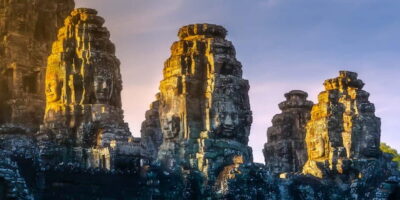
Angkor Wat Highlights and Sunrise Guided Tour from Siem Reap
Read our review →
Angkor Wat Sunrise & 3 Main Temples with Breakfast – Small Group
Read our review →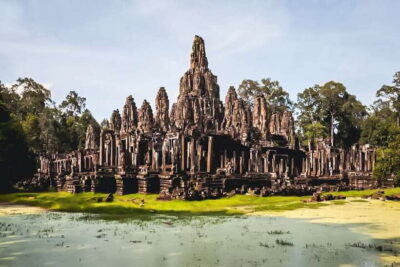
Angkor Wat Sunrise and Full-Day Sightseeing Tour
Read our review →
Angkor Wat Small-Group Exploration with Expert Guide
Read our review →Browse the lists this tour appears in